All destinations

Switzerland

Switzerland
Switzerland 2
Switzerland 3
Switzerland 4
Switzerland 5

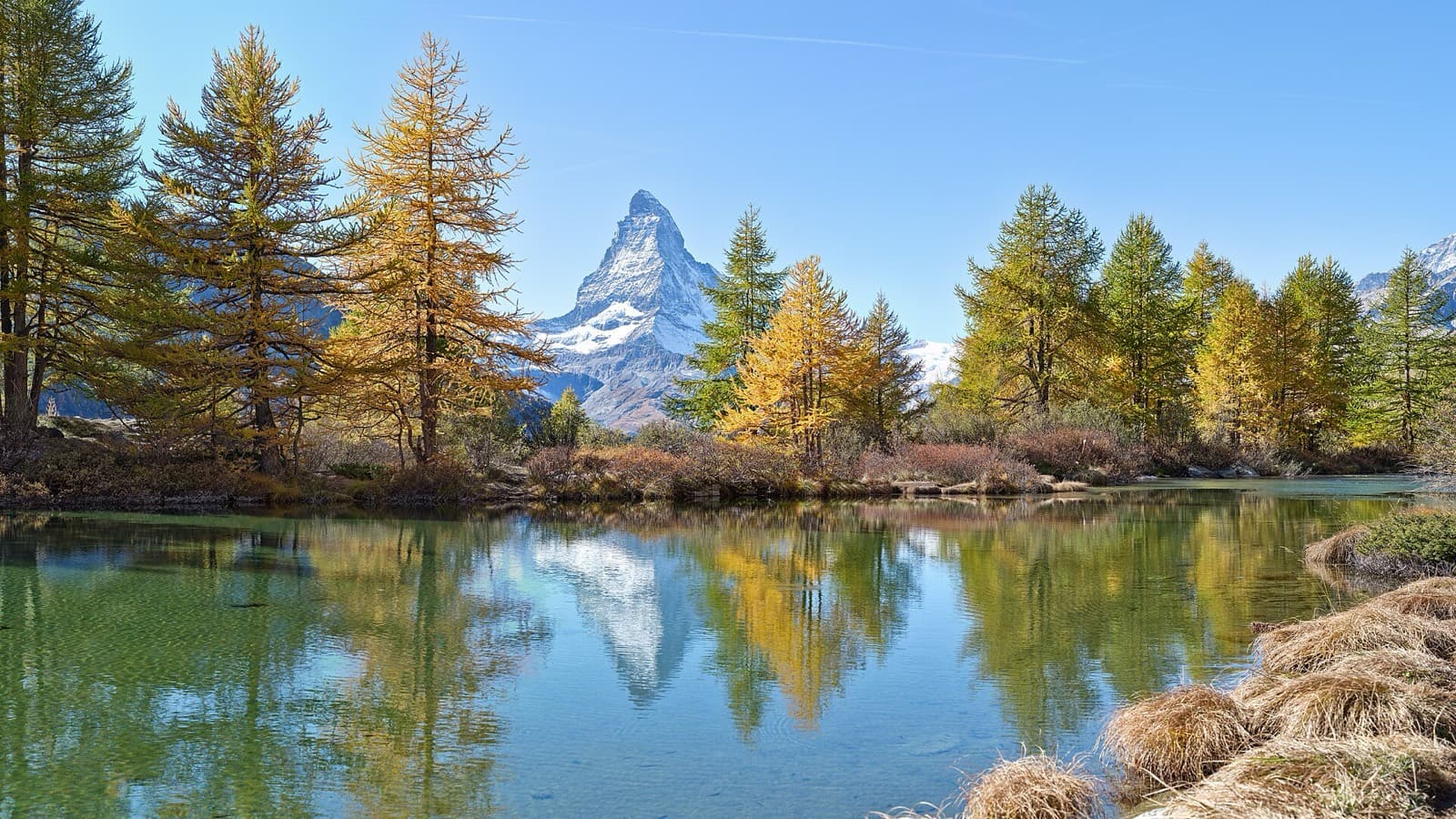
Switzerland is a confederation of twenty-six cantons where close to 60 % of the territory is covered by the Alps; four official languages — German, French, Italian and Romansh — have produced distinct literatures within a single country. Its geography reads in four main bands: the French-speaking west of Geneva and Lake Geneva; the German-speaking north of Zurich, Lucerne and the Rhine Falls; the Alpine heart around the Bernese Oberland and the Eiger-Mönch-Jungfrau trio; the southern face turned towards Italy, from Ticino to the Engadine. The panoramic trains exceed the status of mere scenic curiosity: the Glacier Express crosses 291 bridges and 91 tunnels between Zermatt and Saint-Moritz in eight hours, and the Bernina Express moves in a few hours from glacier altitudes to the Italian-speaking Mediterranean. The Swiss Travel Pass brings together, on a single ticket, trains, buses, boats and museums at the scale of the country.

Practical info

Language
French, German, Italian, Romansh
Currency
Swiss franc (CHF)
Time zone
UTC+1 (CET)
Swiss Travel Pass
Trains, buses, boats and museums on one ticket

Regions

Geneva and Lake Geneva

Geneva and Lake Geneva

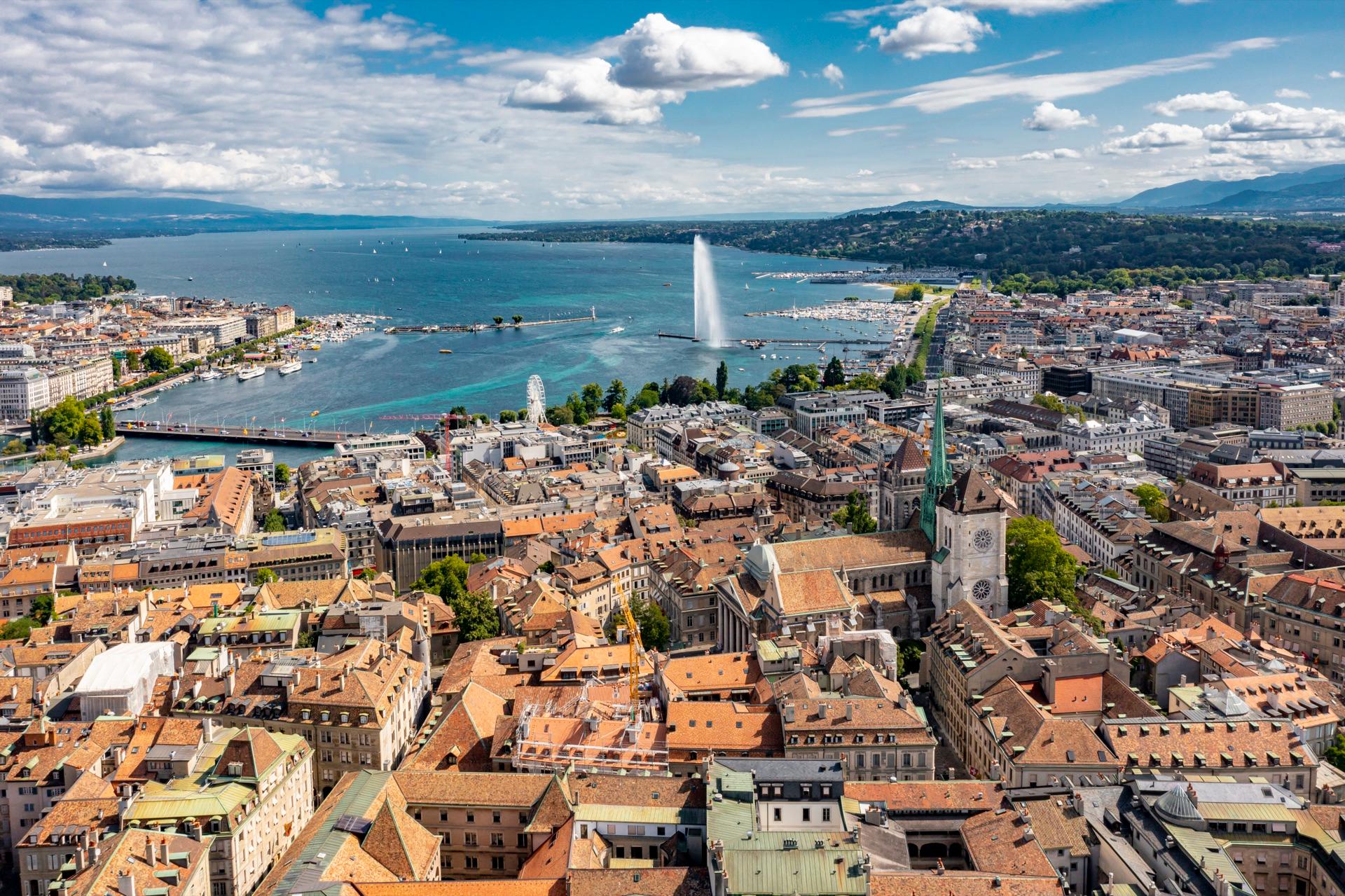
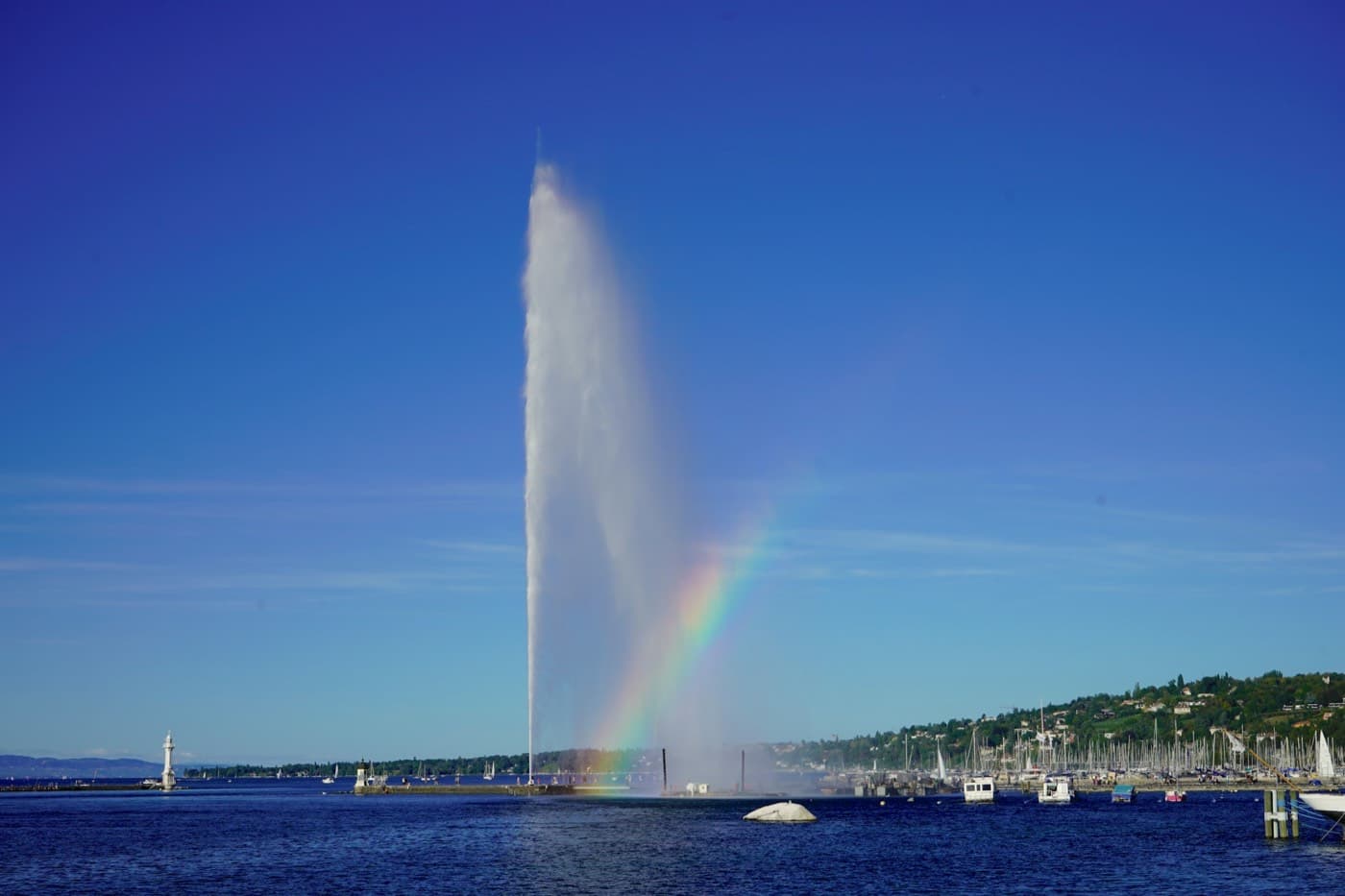
Geneva was born at the point where Lake Geneva empties into the Rhône; in the 20th century the city became a hub of international institutions, home to the United Nations Office, the ICRC and the WHO. The Jet d'Eau shoots its plume one hundred and forty metres above the lake; it began in 1886 as a hydraulic pressure valve and has remained as an urban signature. CERN, with its 27-kilometre Large Hadron Collider, is still the leading centre for contemporary particle physics. Moving east along the lake, Lausanne unfolds its Gothic cathedral and its status as administrative seat of the International Olympic Committee since 1915; Montreux has held its jazz festival every July since 1967; the Château de Chillon, set on a rock at the lake's edge, preserves a 12th-century medieval structure that Lord Byron popularised in his poem The Prisoner of Chillon.

Jet d'EauCERNOld TownLausanneMontreuxChâteau de Chillon
Zurich

Zurich

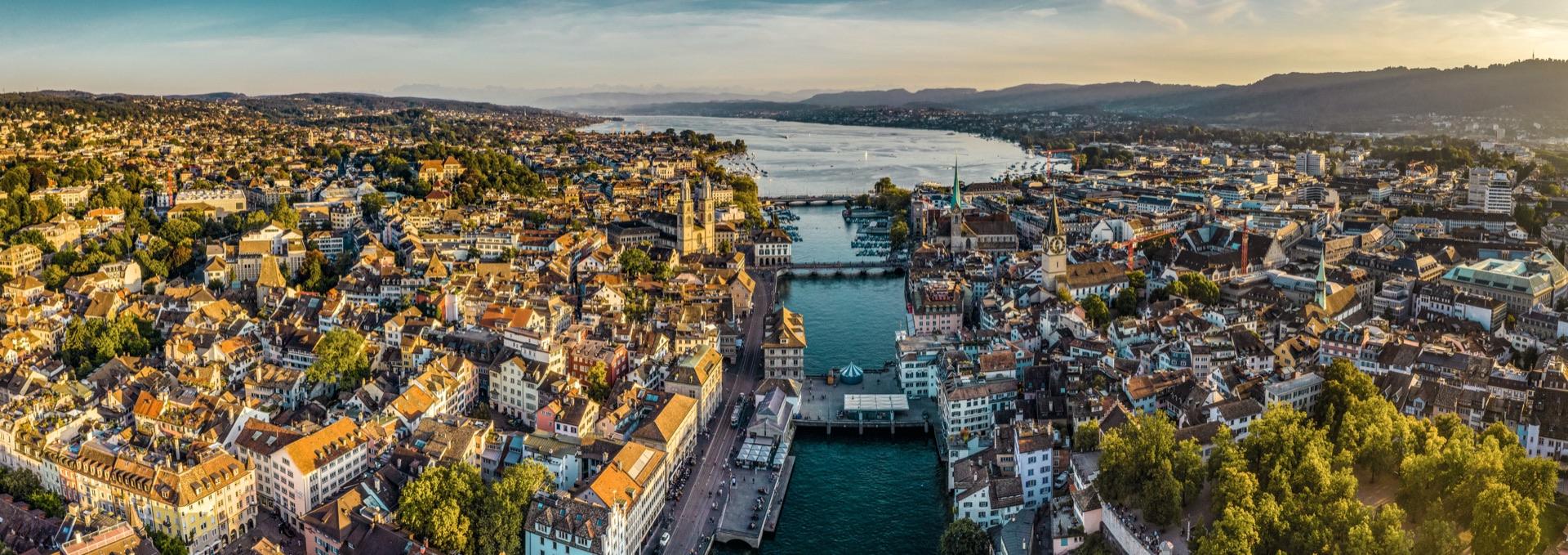
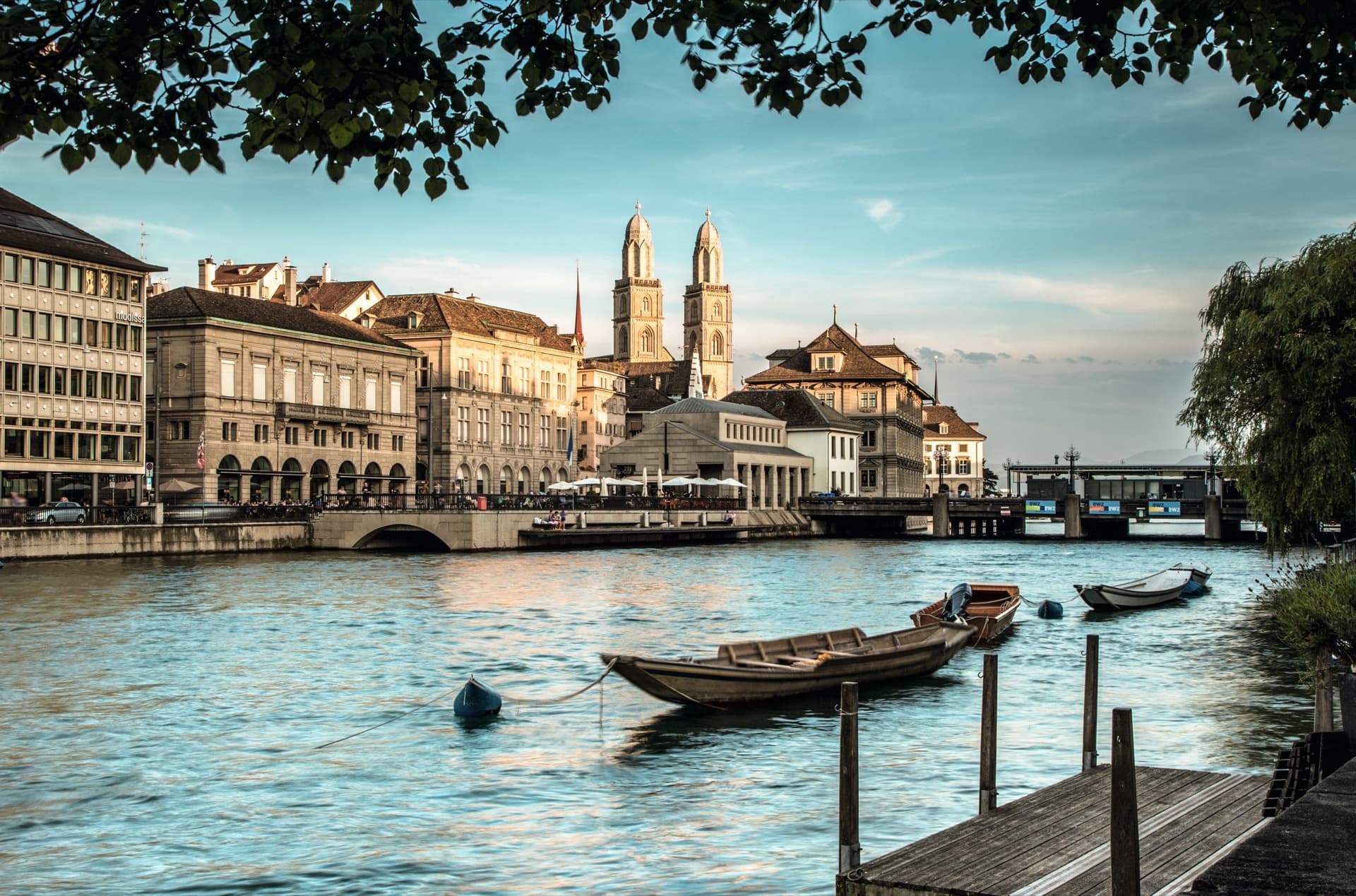
Zurich is the largest city in Switzerland and one of the quiet poles of global finance; to reduce it to its banks, however, is to misread it. The Kunsthaus Zurich holds the largest Giacometti collection in the world and one of the richest Munch holdings outside Norway. Bahnhofstrasse runs 1.4 kilometres as a shopping artery; the old town, on either side of the Limmat, preserves a tight medieval tangle. The Grossmünster, built in the 12th century, was in the 16th the pulpit from which Huldrych Zwingli launched the Swiss Reformation; across the river, the choir of the Fraumünster gained in 1970 five great stained-glass windows designed by Marc Chagall. Fifty kilometres to the north, the Rhine Falls near Schaffhausen are, by flow — around 600 cubic metres per second — the most powerful waterfall in Europe.

BahnhofstrasseOld TownKunsthausLake ZurichRhine Falls
Bern

Bern

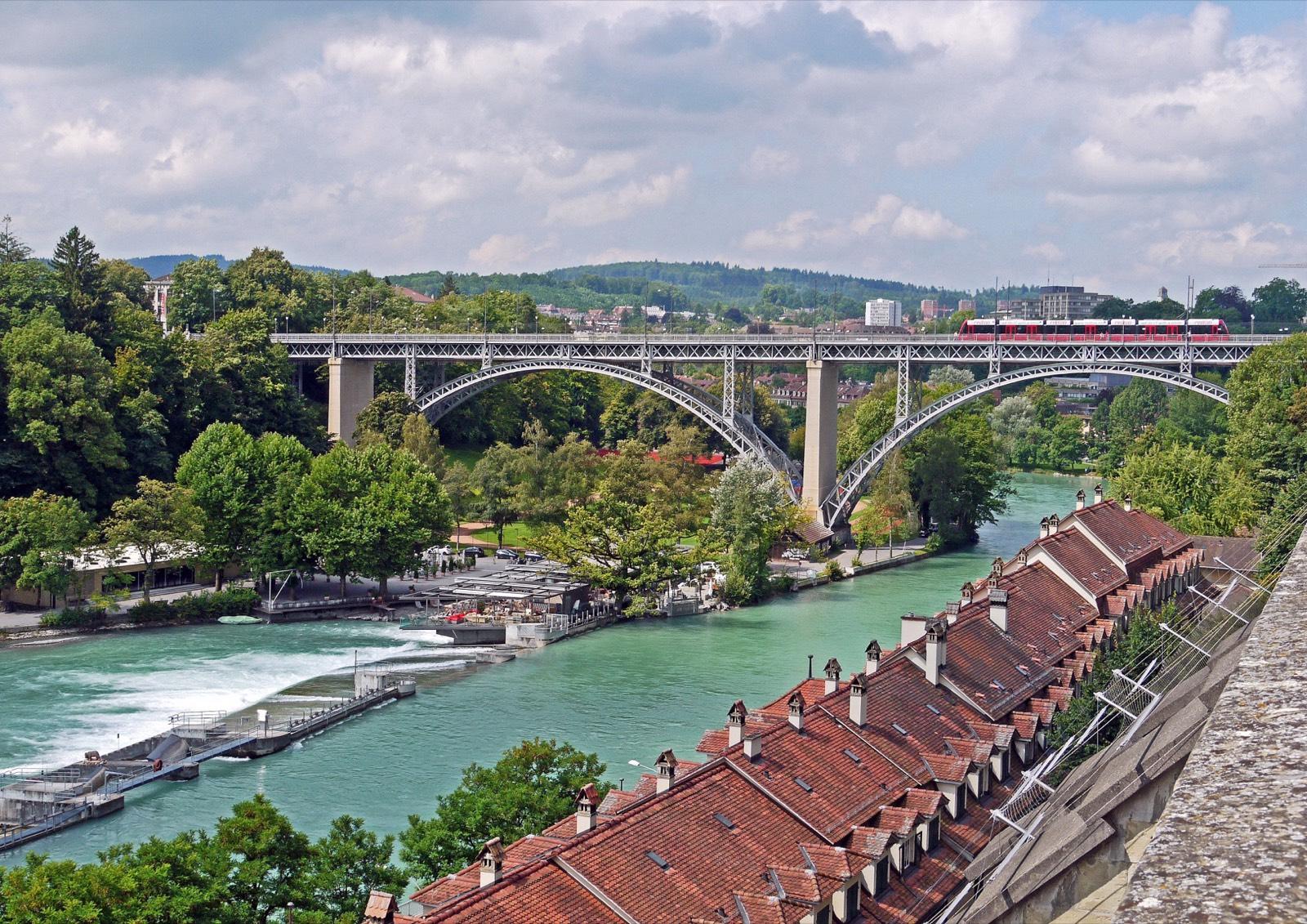
Bern is the Swiss federal capital without quite looking the part: a medieval city the Aare almost entirely encircles in a meander — a singular topographical situation that earned it its UNESCO listing in 1983. The six kilometres of Lauben form the longest continuous arcaded system in Europe, keeping shops and terraces sheltered from rain and snow alike. The Zytglogge, built in the 13th century as the city's western gate, has since 1530 set in motion an astronomical mechanism that performs at each hour. Albert Einstein lived at 49 Kramgasse between 1903 and 1905, writing there the founding papers of special relativity; the apartment is now open to the public. In summer, the people of Bern drift down the turquoise current of the Aare, an urban practice passed across generations.

UNESCO Old TownBear ParkClock TowerEinstein Museum
Lucerne

Lucerne

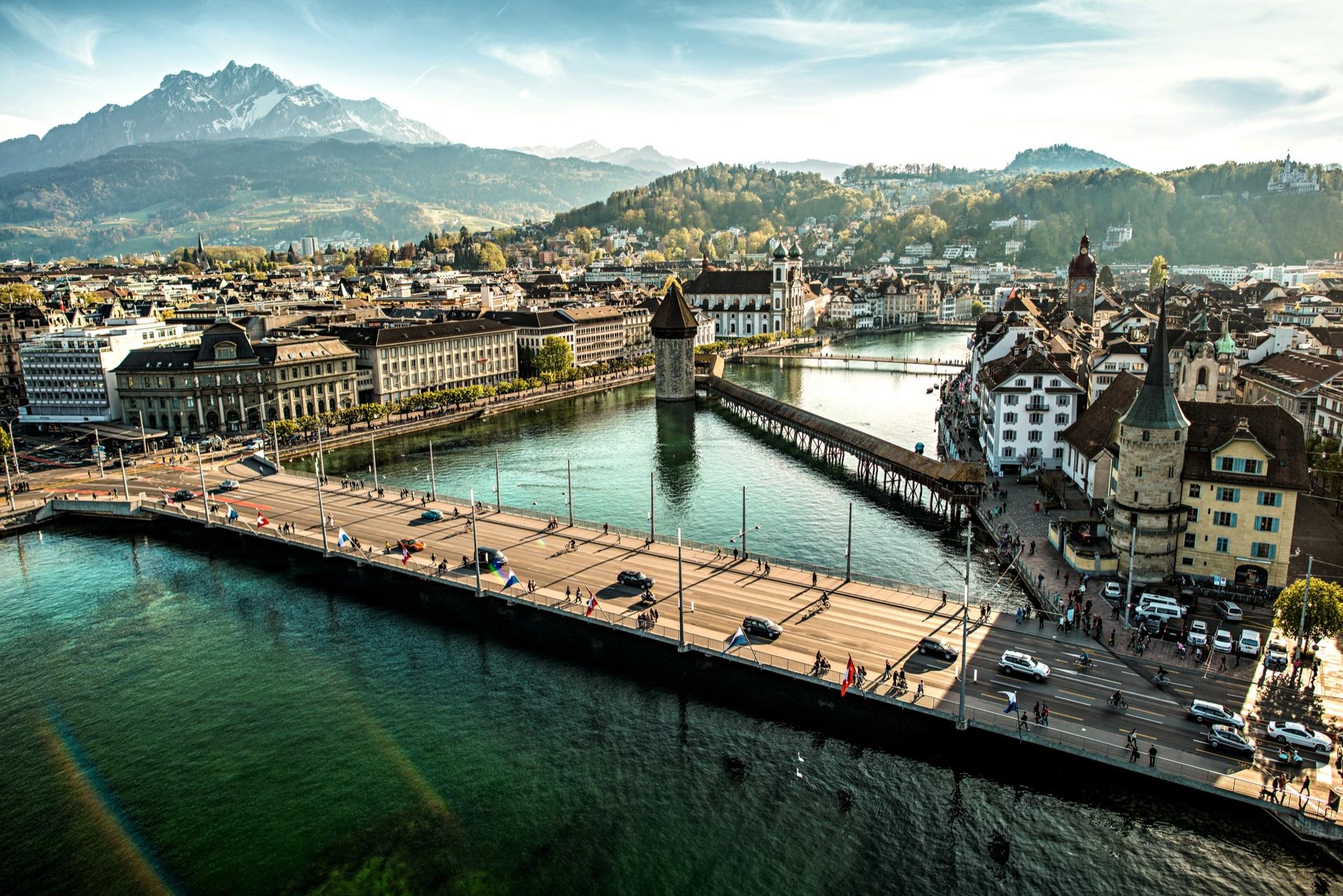
Lucerne stands at the northern tip of Lake Lucerne (Vierwaldstättersee), at the point where the Reuss flows out of the lake. The Chapel Bridge (Kapellbrücke), built in 1333, is the oldest covered wooden bridge still standing in Europe; its 17th-century painted panels, set into the rafters, tell the city's history. After the fire of 1993, most of the destroyed panels were reconstructed using the same technique. The Mount Pilatus cogwheel railway, opened in 1889, reaches an average gradient of 48 % and remains the steepest in the world. Mount Rigi, where the first European cogwheel railway was built in 1871, concentrates on a single summit the view of the lake and the Alpine chain. The old town, with its frescoed façades, also carries the imprint of the great watchmakers — Bucherer, Gübelin — who gave Lucerne its second identity.

Chapel BridgeMount PilatusMount RigiLake Lucerne
Interlaken and Bernese Oberland

Interlaken and Bernese Oberland

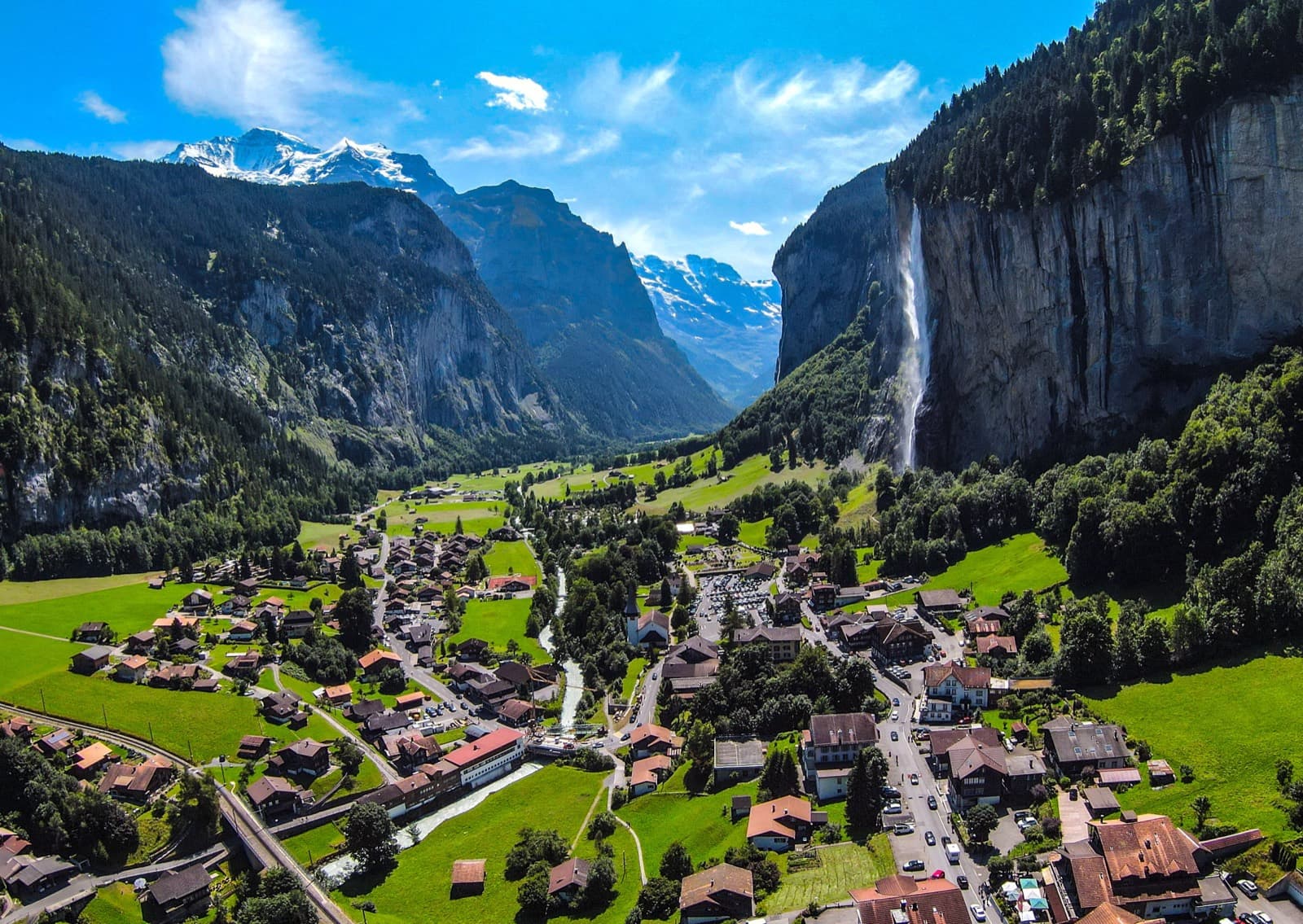
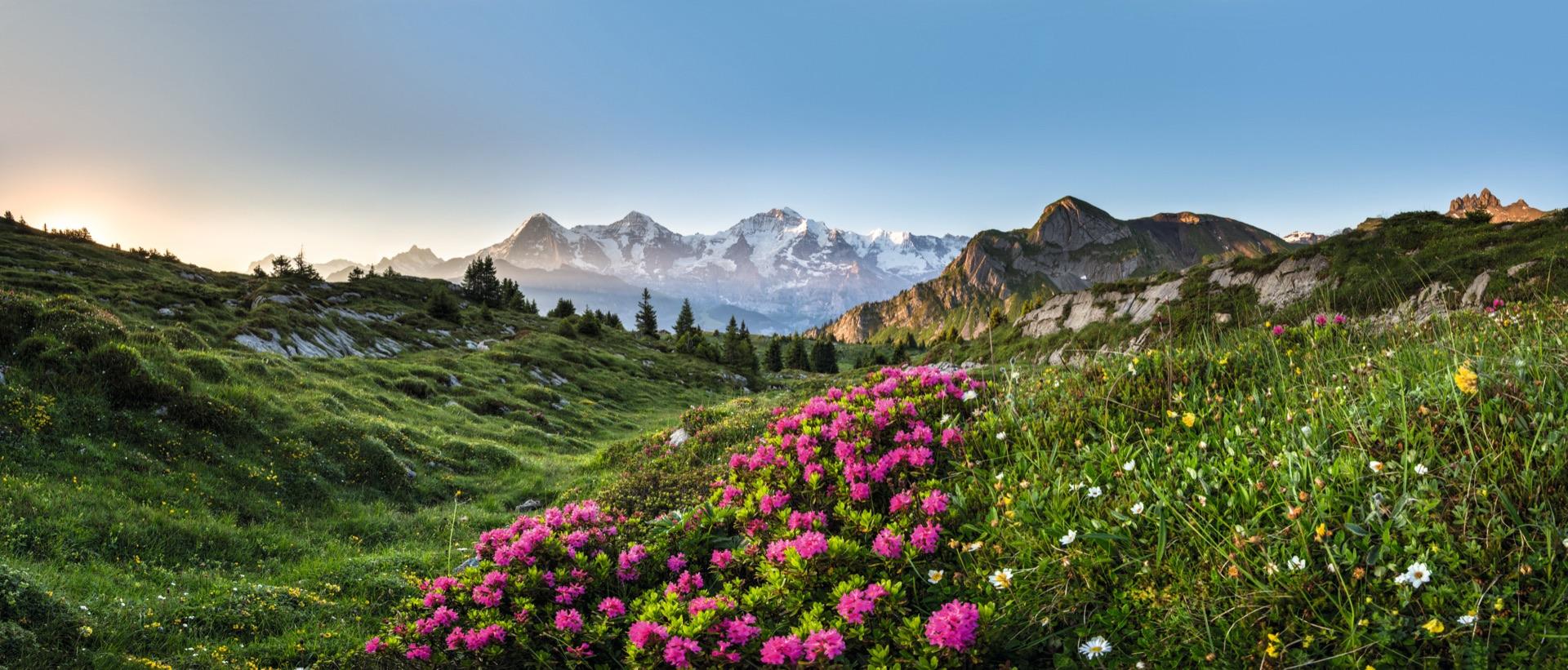
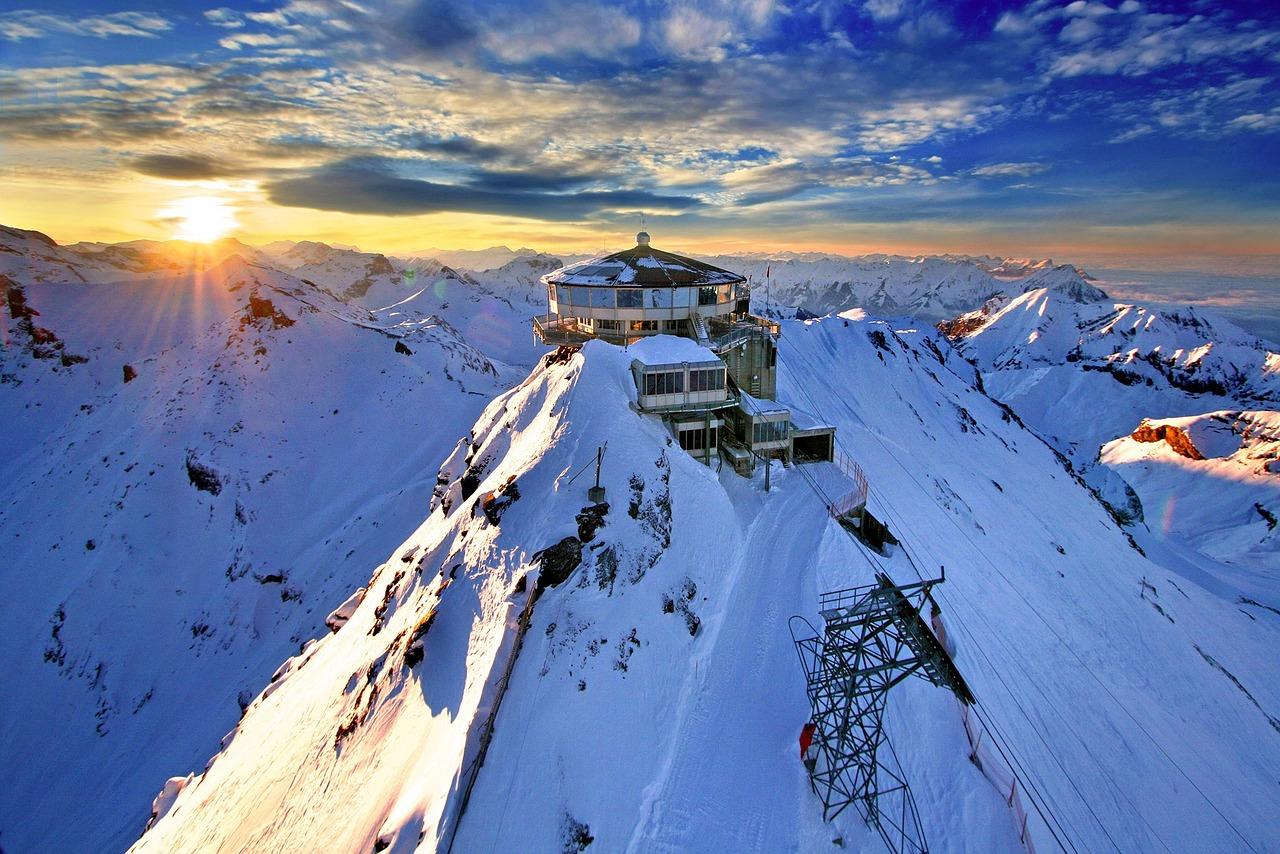
Interlaken owes its name to its position: a narrow ribbon of land between Lake Thun and Lake Brienz. The town grew as a resort from 1856, when the British aristocracy inaugurated Alpine tourism there. Behind it, the silhouette of the Eiger, the Mönch and the Jungfrau commands the valley; the north face of the Jungfrau is still one of the most feared routes in the history of mountaineering. The Jungfraujoch, at 3,454 metres, is the highest railway station in Europe, in year-round operation since the tunnel opened in 1912. The Lauterbrunnen valley, with its 72 waterfalls, is said to have inspired Tolkien's Rivendell; the Staubbach, 297 metres tall, gave its title to a poem by Goethe. Grindelwald and Mürren serve as classic trailheads for Alpine hiking, and the Schilthorn, at 2,970 metres, houses the revolving restaurant filmed in On Her Majesty's Secret Service in 1969.

JungfraujochLauterbrunnenGrindelwaldMürrenSchilthorn
Scenic railways

Scenic railways

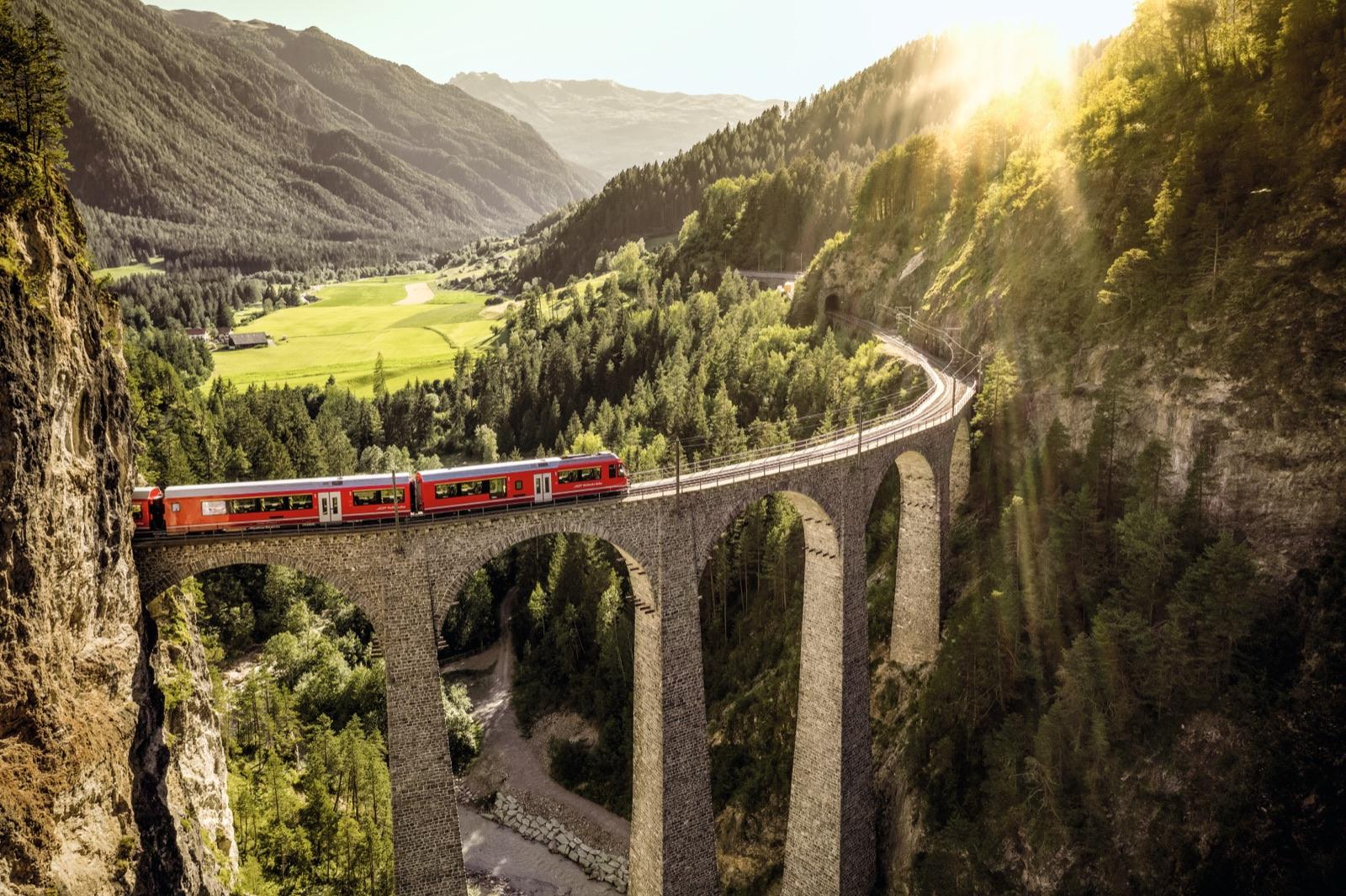
Since the early 20th century Switzerland has developed a railway engineering designed to work with the mountain rather than against it; its panoramic trains do not belong to the realm of entertainment but to a serious tradition of passenger transport. The Glacier Express covers 291 bridges and 91 tunnels between Zermatt and Saint-Moritz in eight hours, crossing the Oberalp Pass at 2,033 metres; its panoramic cars have been in service since 1930. The Bernina Express, whose Albula-Bernina line has been UNESCO-listed since 2008, descends from glacier altitude to Tirano, already under the Italian Mediterranean climate. The GoldenPass, from Lucerne to Montreux via the Pre-Alps, changes gauge along the way; since 2022 a variable-gauge bogie system has allowed passengers to ride the entire itinerary without changing trains.

Glacier ExpressBernina ExpressGoldenPassMount Pilatus
Submit a request