All destinations

Italy

Italy
Italy 2
Italy 3
Italy 4
Italy 5

Italy only became a unified state in 1861; before that it had remained, for centuries, fragmented between city-states, duchies, the Papal States and foreign dynasties, and this long political plurality is the foundation of the country's regional depth today. Rome is a three-thousand-year palimpsest, where each age lay down upon the one before, and where the Pantheon has served without interruption for two millennia. Venice is built on 118 islets and carries the inheritance of a thousand-year maritime republic; Florence is the city where the Renaissance was born in the 15th century, from Brunelleschi's dome to Botticelli, from Michelangelo to Leonardo. In the south, Naples and the Amalfi Coast offer a dramatic compression of the Mediterranean; Tuscany has turned vineyards and olive groves into a recognised cultural landscape. Milan, with its fashion houses, its Design Week and La Scala, carries the economic culture of the north; behind it, Lakes Como, Garda and Maggiore have been, since the 19th century, the great resort destinations at the foot of the Alps. Italian cooking has no single style: each region keeps its pasta, its cheeses, its wines and its table rituals.

Practical info

Language
Italian
Currency
Euro (€)
Time zone
UTC+1 (CET)
Rail network
Frecciarossa high-speed, Rome to Milan in 3 hours

Regions

Rome

Rome

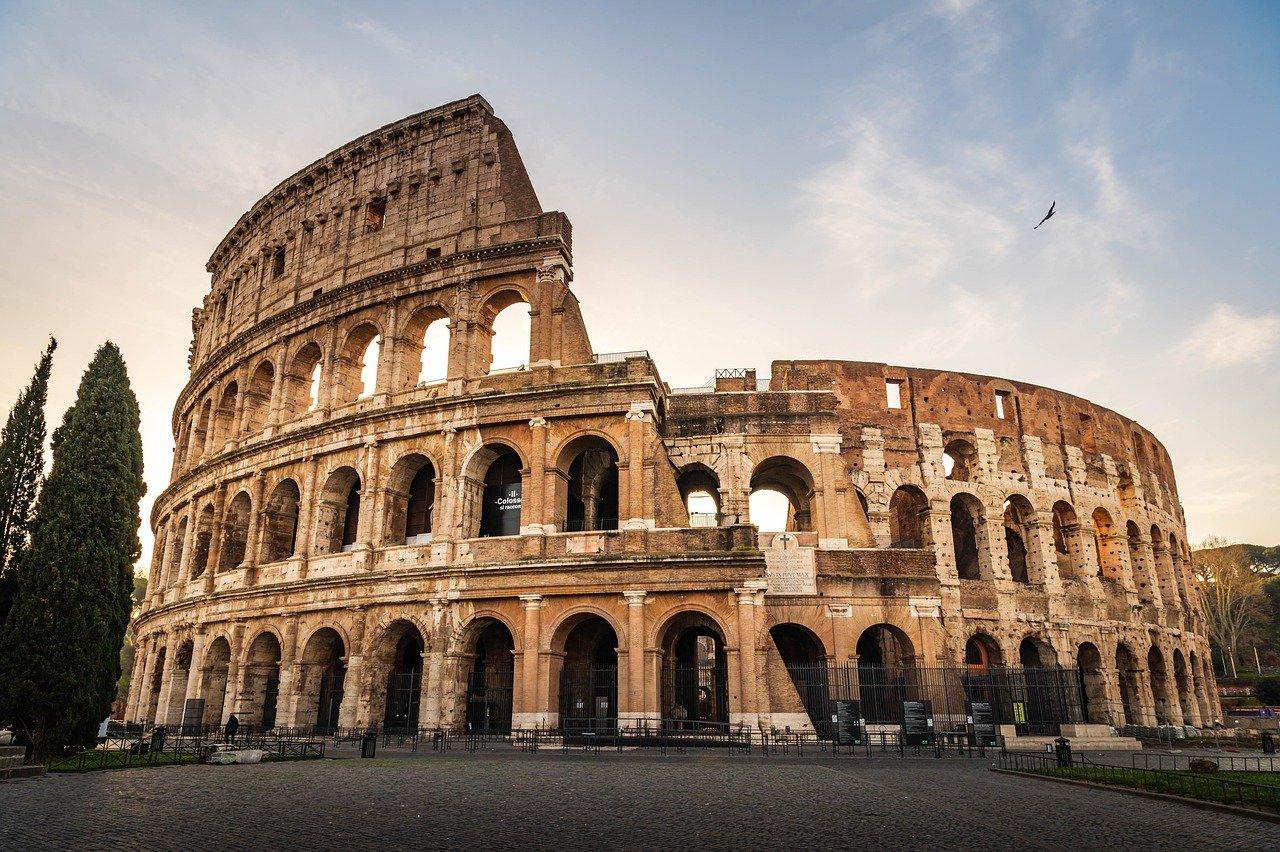
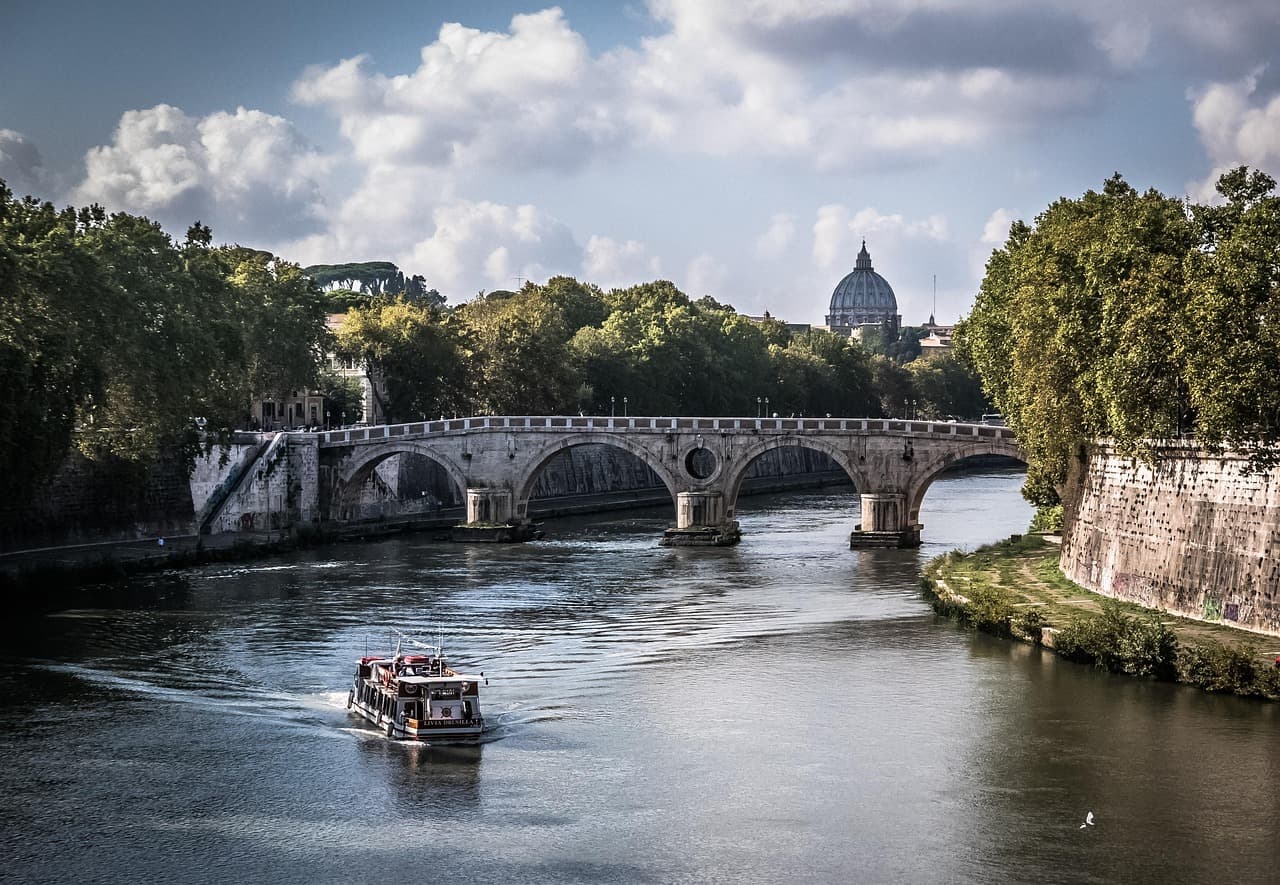
Rome, founded according to tradition in 753 BCE, was the capital of an empire for two thousand years and the centre of Western Christianity for the two millennia that followed; this continuity gives the city its singular historical depth. The Colosseum, inaugurated in 80 CE under Titus, held up to fifty thousand spectators and remains the largest amphitheatre of the ancient world. The Pantheon, rebuilt under Hadrian around 126, has been in continuous use ever since; its unreinforced concrete dome, with an interior diameter of 43.3 metres, is still the largest of its kind in the world. The Vatican, the world's smallest independent state at 44 hectares, holds the Sistine Chapel vault painted by Michelangelo between 1508 and 1512 and the Baroque square designed by Bernini before St Peter's. Trastevere, a formerly working-class district on the west bank of the Tiber, has kept through its trattorias the most relaxed face of the city. The Spanish Steps, built in 1725 thanks to the bequest of a Florentine banker, open onto Via Condotti, the Roman axis of the great Italian fashion houses.

ColosseumVaticanPantheonTrasteverePiazza Navona
Venice

Venice

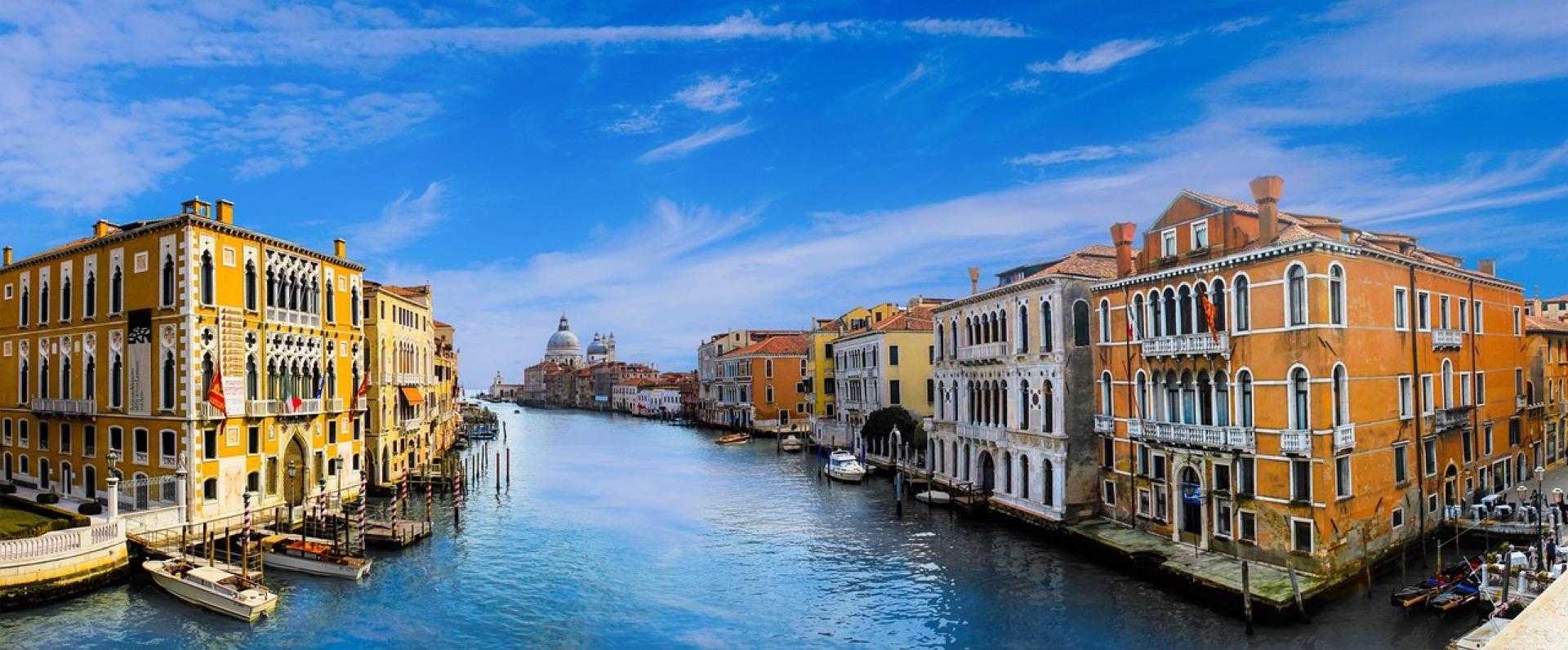
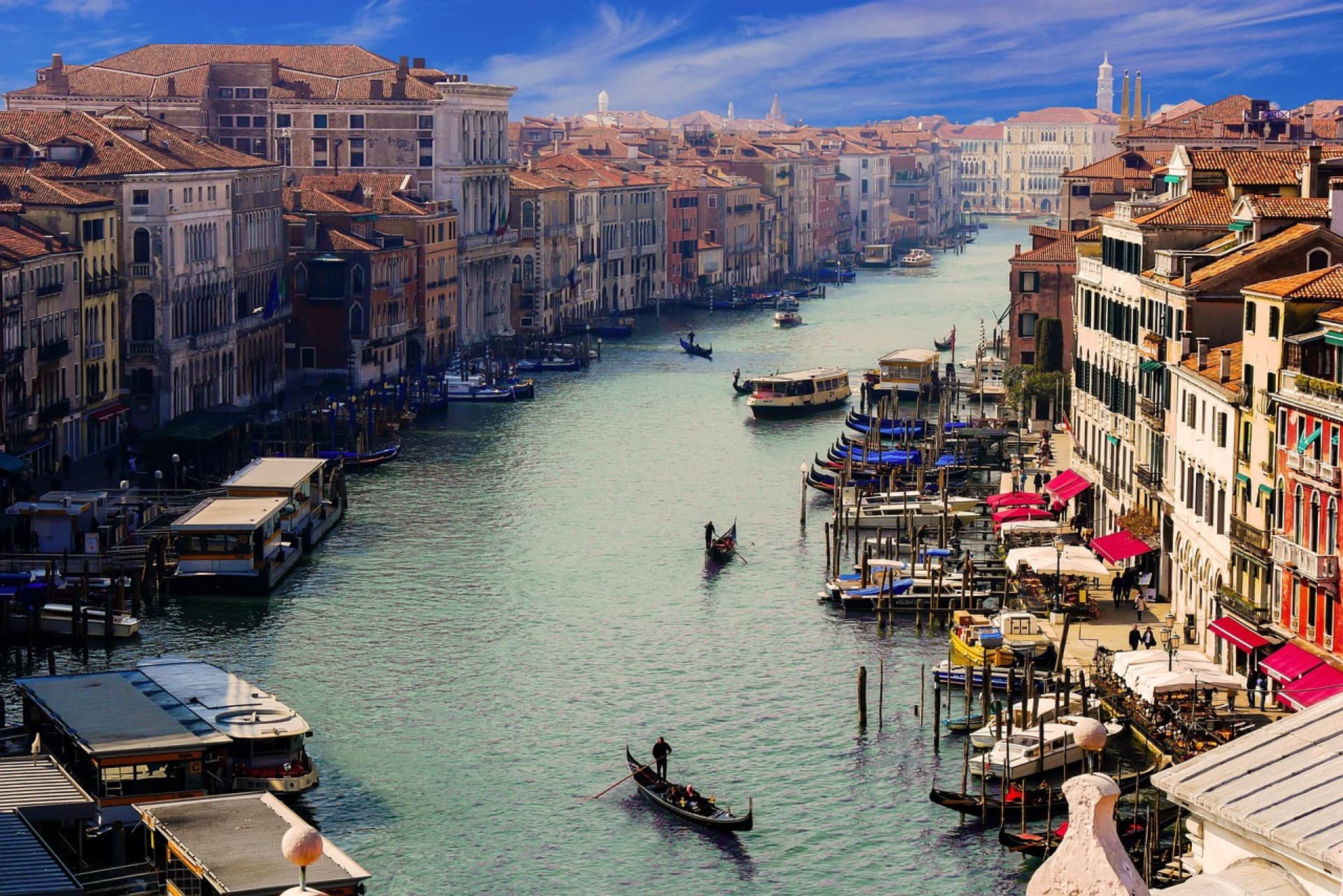
Venice was built inside a lagoon at the northern end of the Adriatic, on 118 islets fixed by wooden piles from the 5th century onwards; during the thousand years that its maritime republic lasted, it was one of the great commercial powers of the Mediterranean. St Mark's Square, which Napoleon called the most beautiful drawing room in Europe, carries with its Byzantine domes and golden mosaics the imperial inheritance of Byzantium on Christian soil. The Rialto Bridge, completed in 1591, remained for three hundred years the only stone bridge across the Grand Canal. The Doge's Palace housed the republic's government for centuries behind its Gothic façade; the Bridge of Sighs connected it to the old prison. The urban fabric, tight and cut by more than 400 bridges, makes Venice a city to be walked; deliveries are still made by handcart. On the outer islands, Murano has continued for seven centuries the craft of blown glass, and the coloured façades of Burano, along with its lace tradition, give it a character of its own.

St Mark's SquareRialto BridgeDoge's PalaceMuranoBurano
Florence and Tuscany

Florence and Tuscany

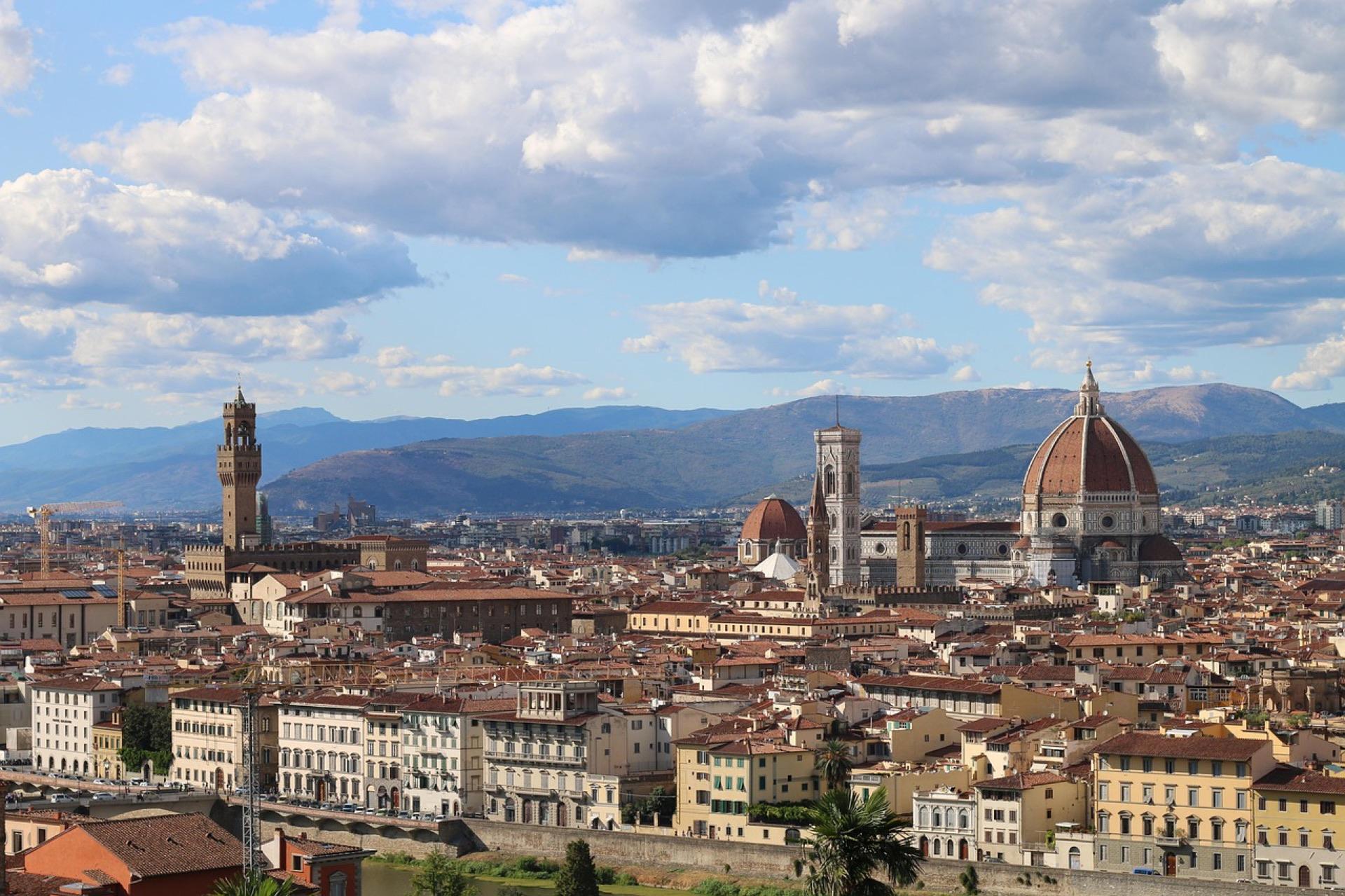
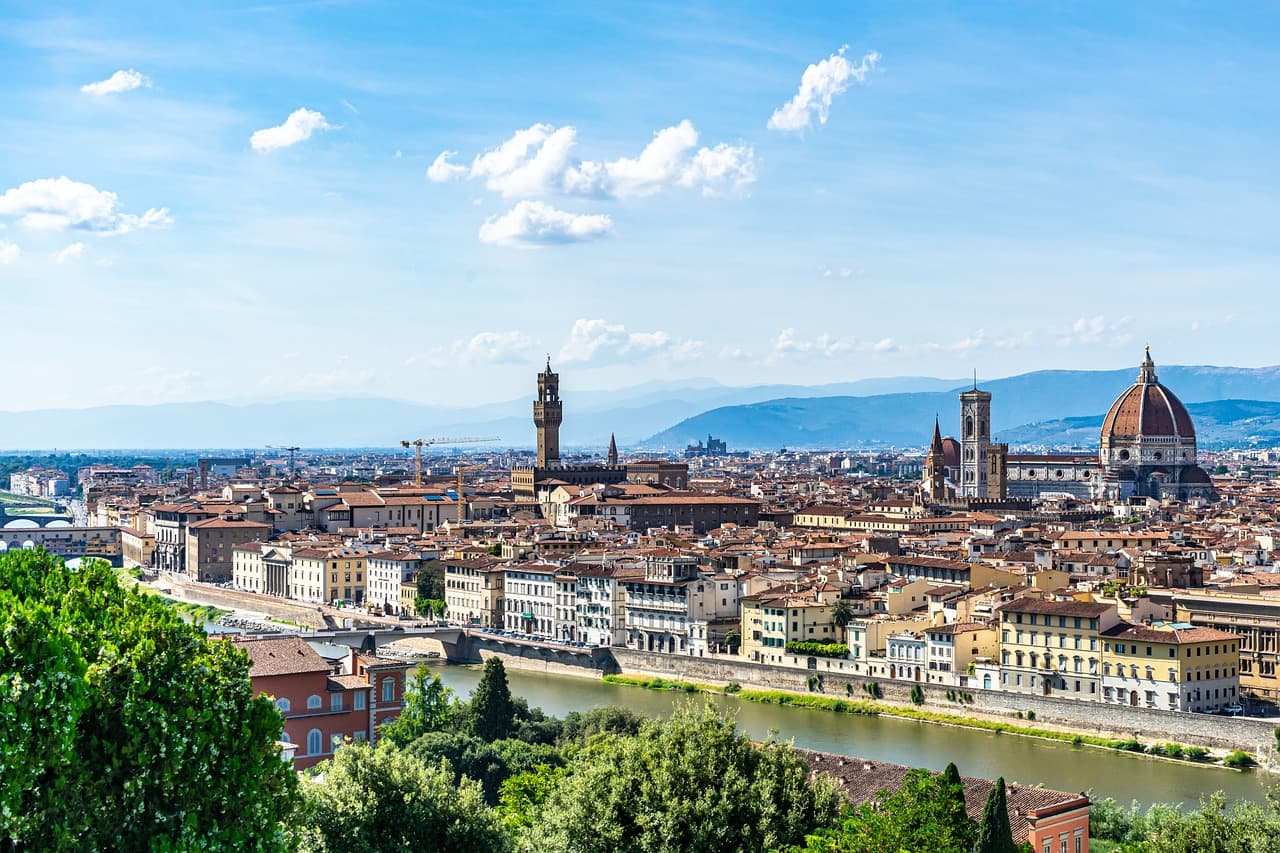
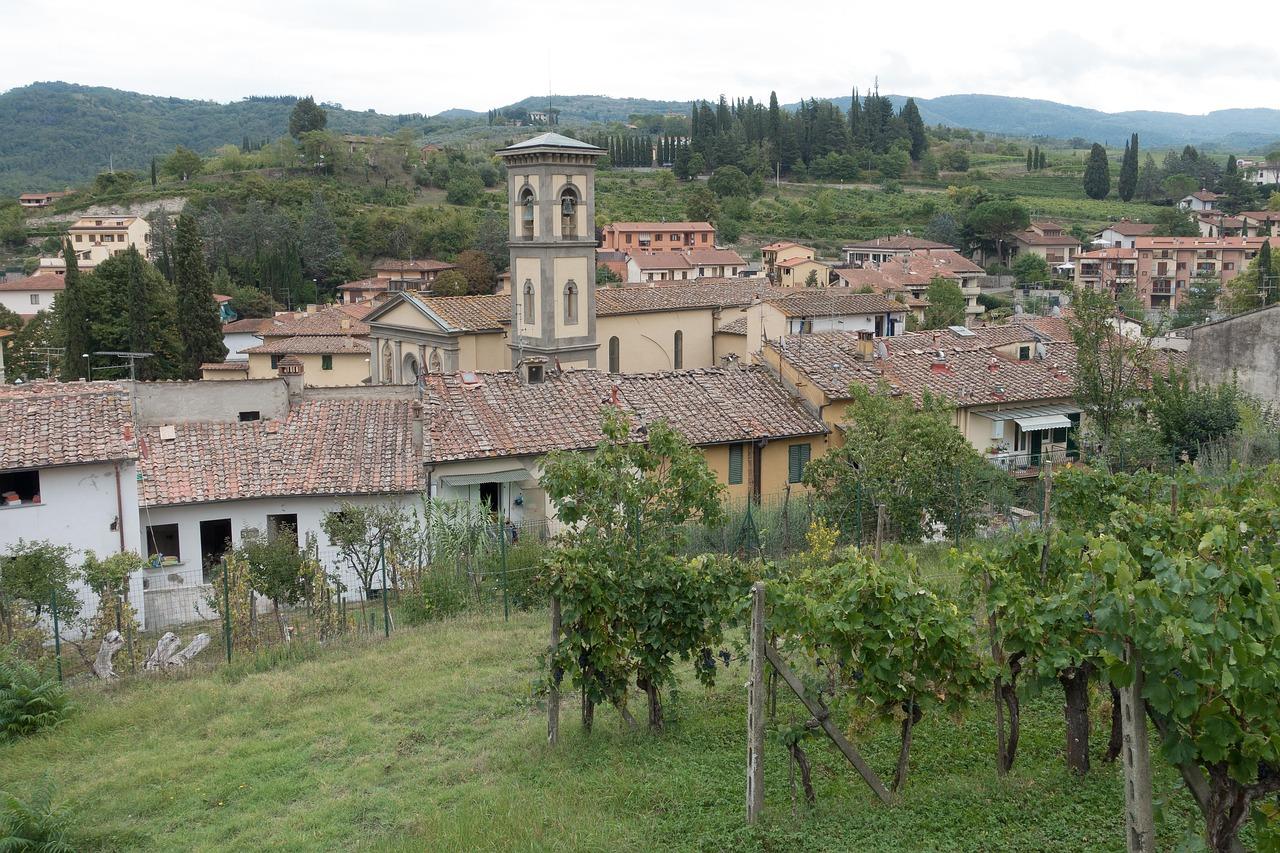
Florence is the city where, in the 15th century, under the patronage of the Medici, the Renaissance found its first accomplishments in architecture and art. Brunelleschi's dome, completed in 1436, remains the largest brick dome ever built since Roman antiquity and defines the silhouette of the city. The Uffizi Gallery, housed in the former Medicean administration, holds Botticelli's Birth of Venus and Primavera, Leonardo's Annunciation, Caravaggio's head of Medusa. The Accademia holds Michelangelo's David, finished in 1504 and standing 5.17 metres tall. The Ponte Vecchio, built in 1345, is still lined by its goldsmiths' shops; it was the only bridge over the Arno not dynamited during the Second World War. Beyond the city, Tuscany unfolds its rows of cypresses, its Chianti vineyards, its wine-making villages such as Montepulciano and Montalcino. Siena has kept its fan-shaped medieval Piazza del Campo and, for more than seven centuries, has held the Palio horse race there every 2 July and 16 August. San Gimignano, once bristling with 72 towers, still keeps fourteen — a witness to the medieval idea of a vertical urbanism.

UffiziDuomoPonte VecchioSienaSan Gimignano
Amalfi Coast

Amalfi Coast

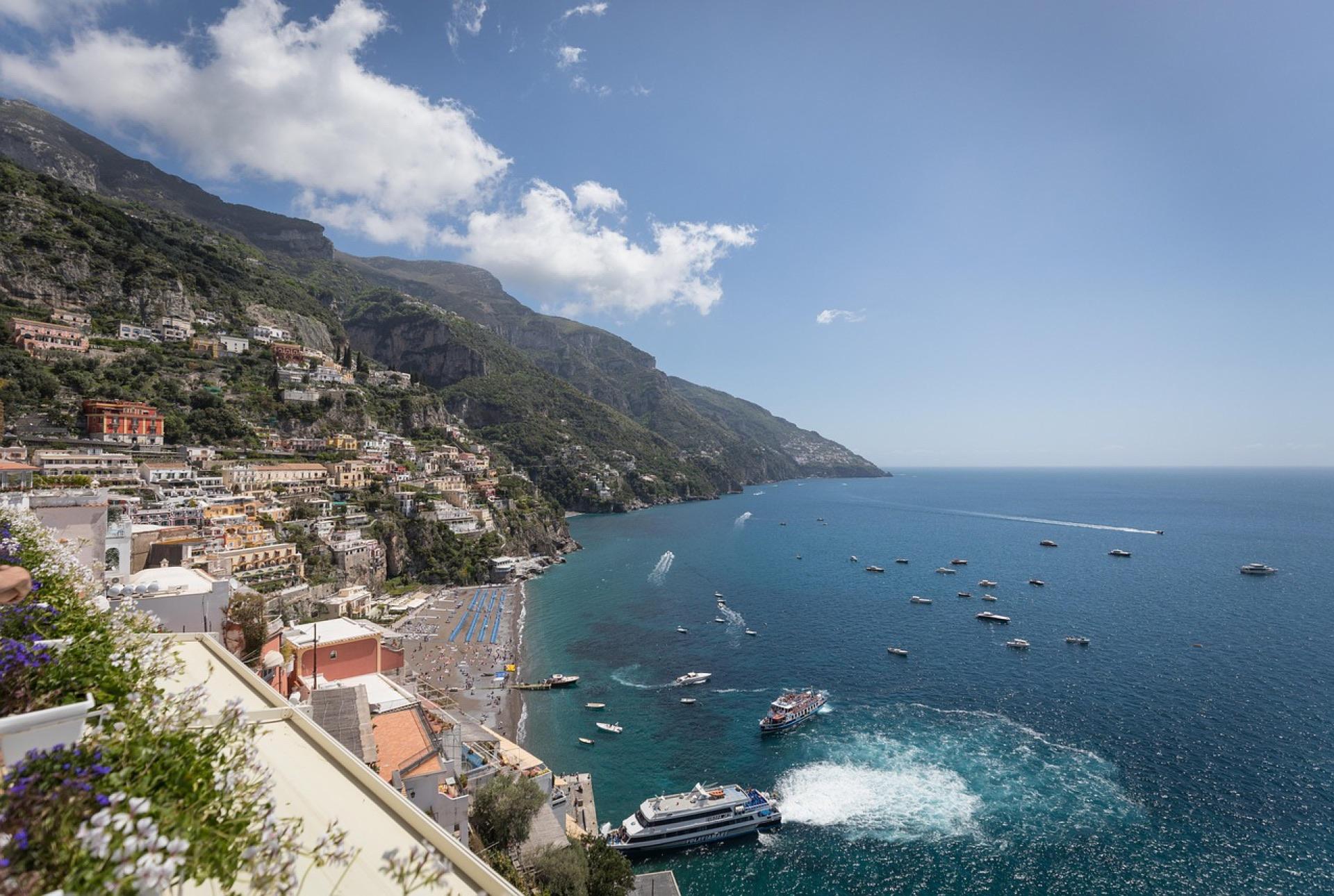
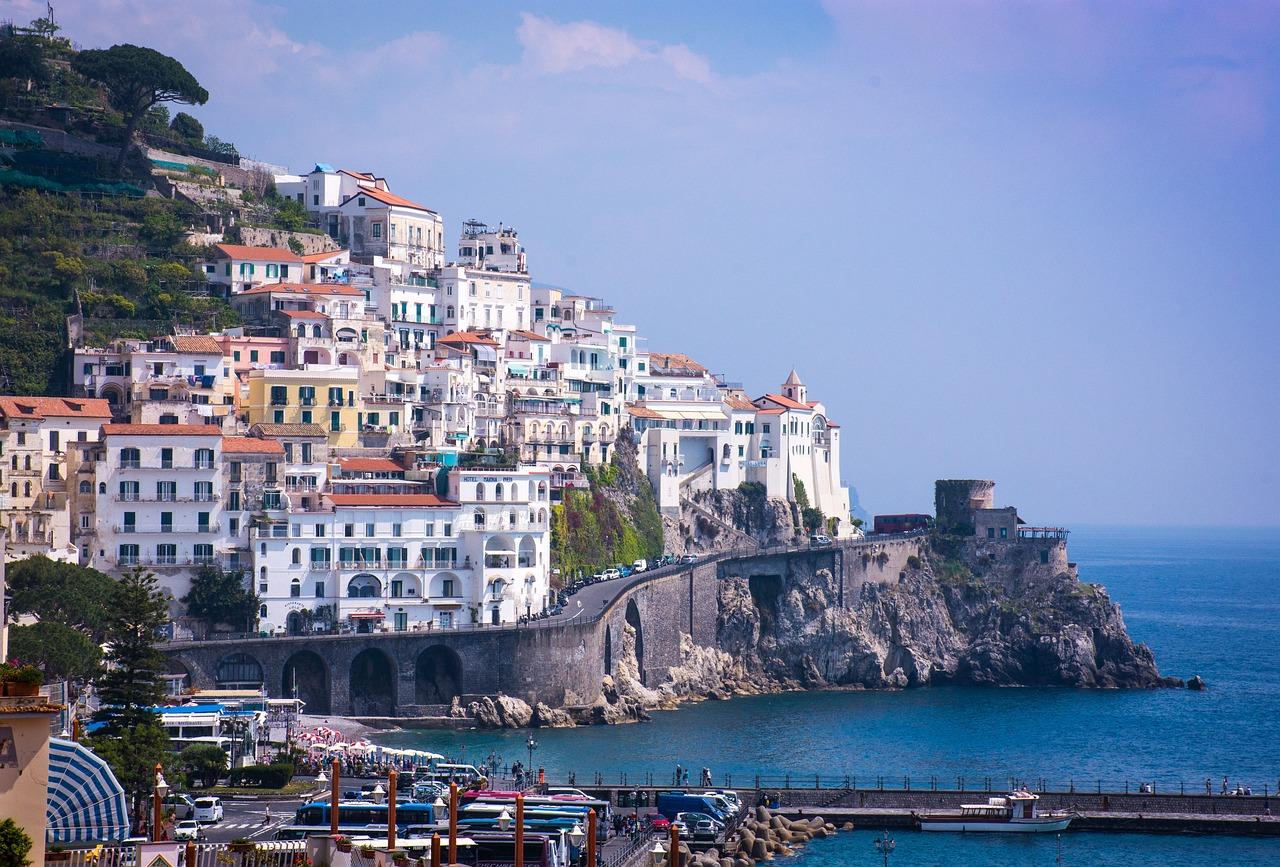
The Amalfi Coast stretches fifty kilometres along the southern flank of the Sorrento peninsula and has been UNESCO-listed since 1997; the way the villages hook themselves to the cliff, linked by thousands of steps and arcaded terraces, is the product of several centuries of dialogue between people and slope. In the Middle Ages, Amalfi was already, from the 9th century, the centre of a maritime republic; it is from here that the local roots of pizza marinara and limoncello come, along with the bronze doors of the cathedral of Amalfi. Positano, built on a steep slope in tiered pastel houses, became known in the middle of the 20th century through the writing of John Steinbeck. Ravello, perched 365 metres above the sea, holds the gardens of the Villa Rufolo and the Villa Cimbrone, which inspired Wagner for the set of Parsifal. Capri, at the southern tip of the Bay of Naples, keeps its Blue Grotto and the remains of the Villa Jovis where the emperor Tiberius withdrew; it is reached by a short crossing from Sorrento.

PositanoRavelloAmalfiCapriLimoncello
Milan and the Lakes

Milan and the Lakes

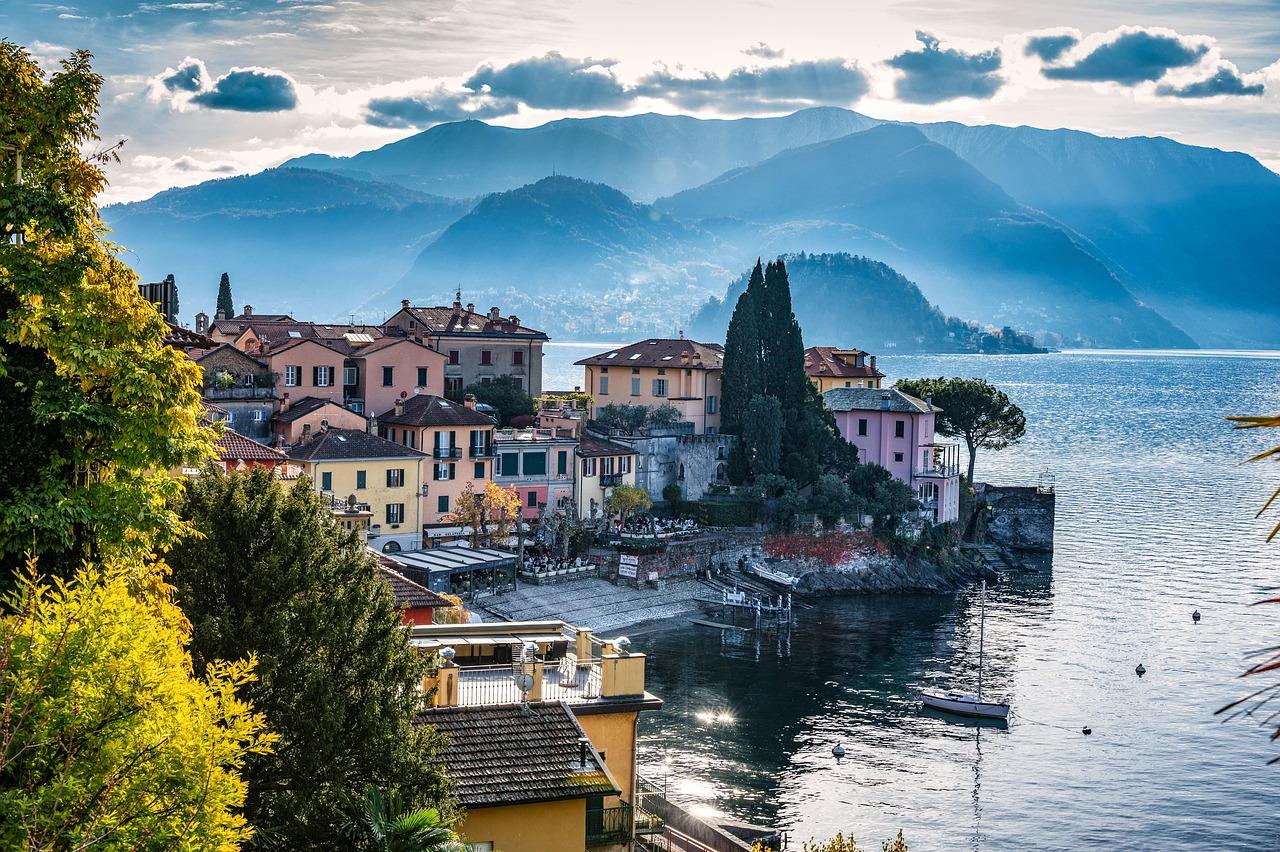
Milan, capital of Lombardy, is the northern pole of the Italian economy: finance, fashion, design. The Duomo, whose construction was begun in 1386 and completed only in the 19th century, remains the largest Gothic cathedral in Italy with more than 3,400 statues and 135 spires; it is entirely faced in pink and white Candoglia marble. La Scala, inaugurated in 1778 under Maria Theresa of Austria, is the stage on which the careers of Verdi, Puccini and Toscanini were built. The Last Supper, painted by Leonardo da Vinci between 1495 and 1498 in the refectory of Santa Maria delle Grazie, remains a strictly limited-access site; humidity and light are tightly controlled to preserve the fresco. To the north, three great lakes extend the Lombard landscape. Lake Como stretches in an inverted Y, bordered by Bellagio and the Villa del Balbianello, a resort of the European aristocracy since the 19th century. Lake Garda is the largest in Italy; its mild climate allows lemon trees to grow, and the Sirmione peninsula keeps the remains of a Roman villa attributed to the poet Catullus. Lake Maggiore, which reaches up to the Swiss border, holds the Borromean Islands and their 17th-century Baroque palaces.

Milan CathedralLa ScalaLake ComoLake GardaBellagio
Sicily

Sicily

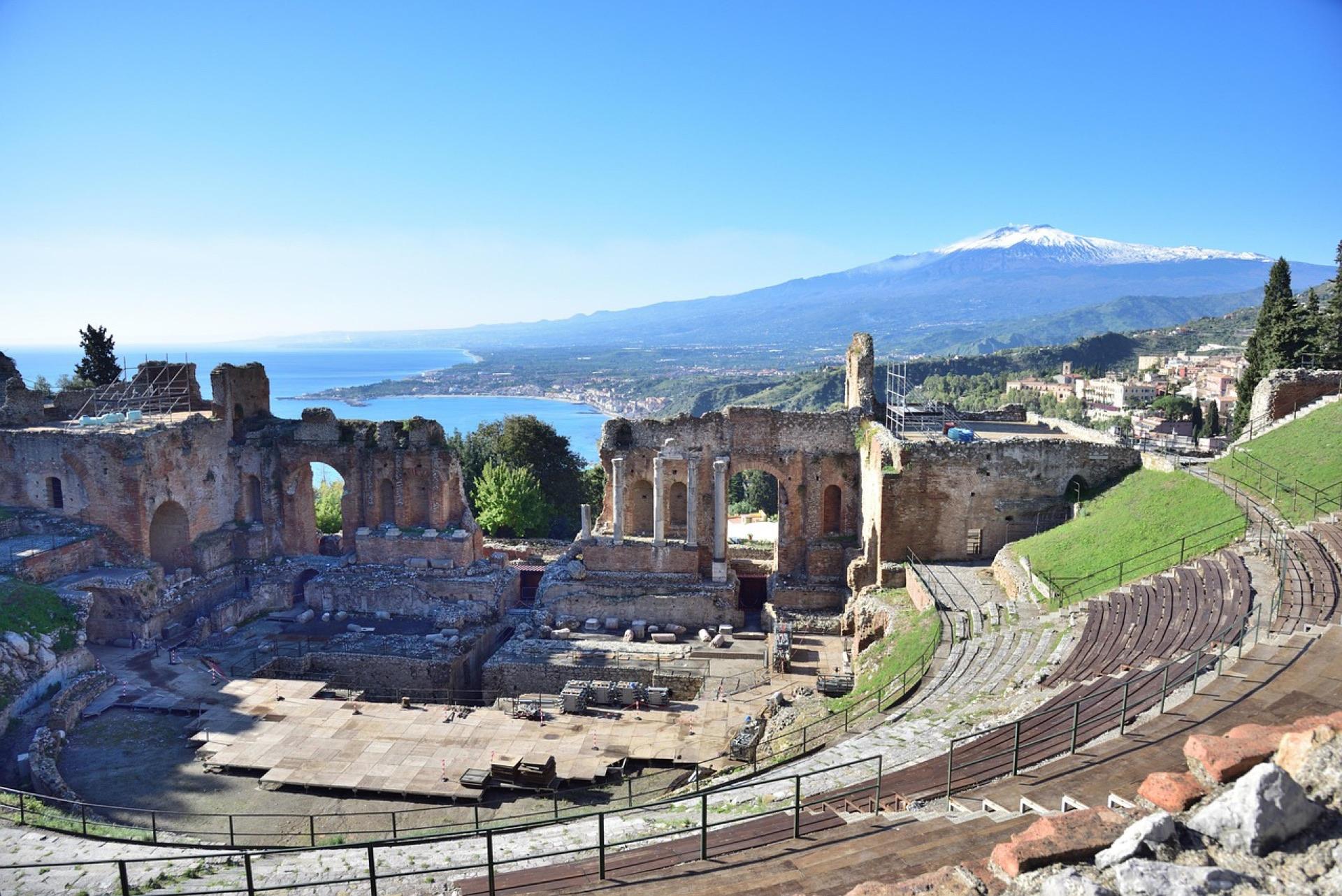
Sicily is an island where three thousand years of history layer over a single geography — Greeks, Romans, Arabs, Normans, Spaniards and Bourbons each leaving stone and recipes. Taormina's ancient Greek theatre, cut into the rock in the 3rd century BC, frames Mount Etna in the distance — Europe's highest active volcano at 3,357 metres, UNESCO-listed and still erupting on a regular cycle. Palermo's Norman cathedral, completed in 1185, anchors the Arab-Norman heritage trail with its rare Byzantine-Arab synthesis. The Valley of the Temples at Agrigento preserves the finest Doric architecture outside Greece, with the Temple of Concordia almost intact. The Late Baroque towns of Val di Noto — Noto, Ragusa, Modica, Catania — were rebuilt after the 1693 earthquake as a single stylistic experiment. The table shifts mile by mile: pasta alla Norma in Catania, pane con la milza in Palermo, the Aztec-rooted chocolate of Modica, and cassata everywhere.

TaorminaEtnaPalermoAgrigentoVal di Noto
Submit a request