All destinations

Spain

Spain
Spain 2
Spain 3
Spain 4
Spain 5

Spain occupies most of the Iberian Peninsula; organised into seventeen autonomous communities, it has become over time the second most visited country in Europe. Its geography juxtaposes deeply distinct regions: in Catalonia, Barcelona has carried the modernismo of Gaudí onto the world stage; in Madrid, the museum triangle of the Prado, Reina Sofía and Thyssen-Bornemisza gathers, within barely a kilometre, a significant share of European painting. Andalusia carries eight centuries of Muslim inheritance through the Alhambra of Granada, the Mezquita of Córdoba and the Alcázar of Seville; this architectural density bears witness to the historical link between Spain and the Mediterranean and North African worlds. In the Basque Country, Bilbao entered the manuals of post-industrial urbanism after the opening of Frank Gehry's Guggenheim in 1997; San Sebastián and its surroundings today count among the areas of the world with the highest density of Michelin stars per square kilometre. Valencia is the birthplace of paella, a recipe that has become a matter of local identity.

Practical info

Language
Spanish
Currency
Euro (€)
Time zone
UTC+1 (CET)
Rail network
AVE high-speed, Madrid to Barcelona in 2h30

Regions

Barcelona

Barcelona

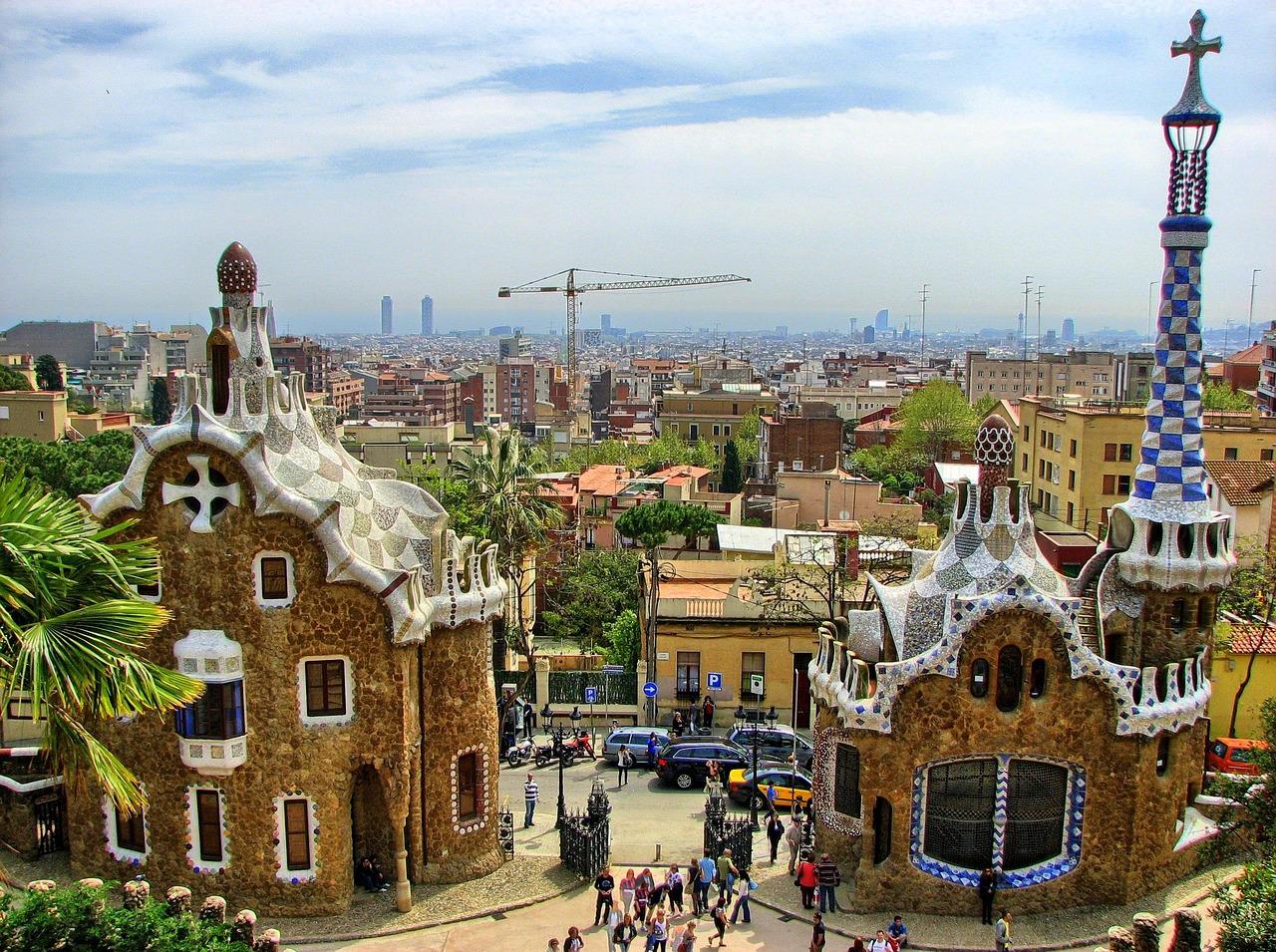
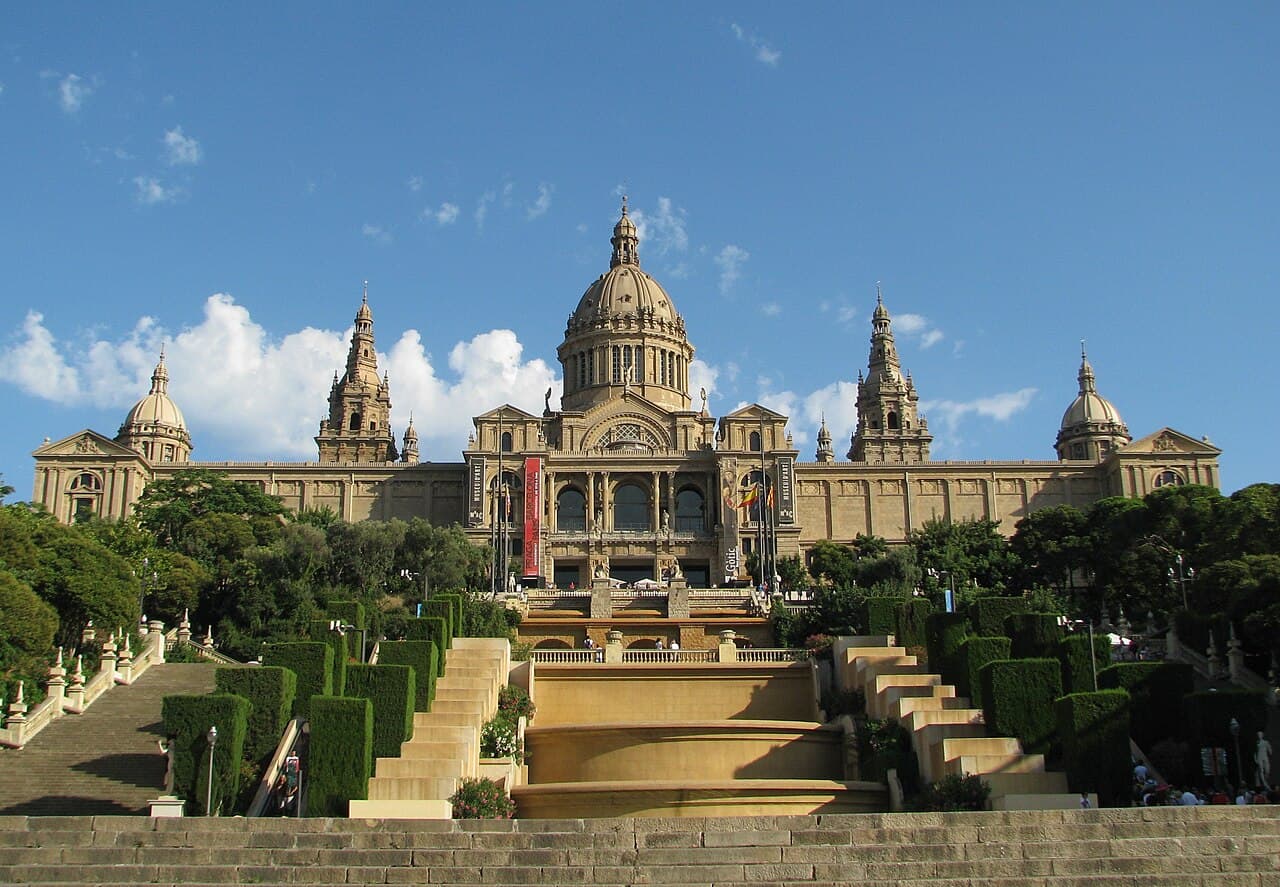
Barcelona, capital of Catalonia, is the city where the late-19th-century modernismo found its most accomplished architectural realisations. The Sagrada Família, whose first stone Gaudí laid in 1882, remains unfinished; its central spire is due to reach 172 metres in 2026, making it eventually the tallest church in Europe. Parc Güell was first conceived as a residential estate; the commercial failure of the project led the municipality to buy the site, and it became, with its trencadís serpentine bench, an open-air gallery of modernismo. The Barri Gòtic preserves a medieval fabric built on the remains of Roman Barcino; the Ramblas run 1.2 kilometres between Plaça de Catalunya and the Columbus column at the port. Barceloneta beach, entirely reconfigured for the 1992 Olympic Games, embodies Barcelona's contemporary turn towards the sea. Montjuïc, which houses the Joan Miró Foundation and the MNAC, is the one hill from which to take in the whole city.

Sagrada FamíliaParc GüellBarri GòticLa BarcelonetaMontjuïc
Madrid

Madrid

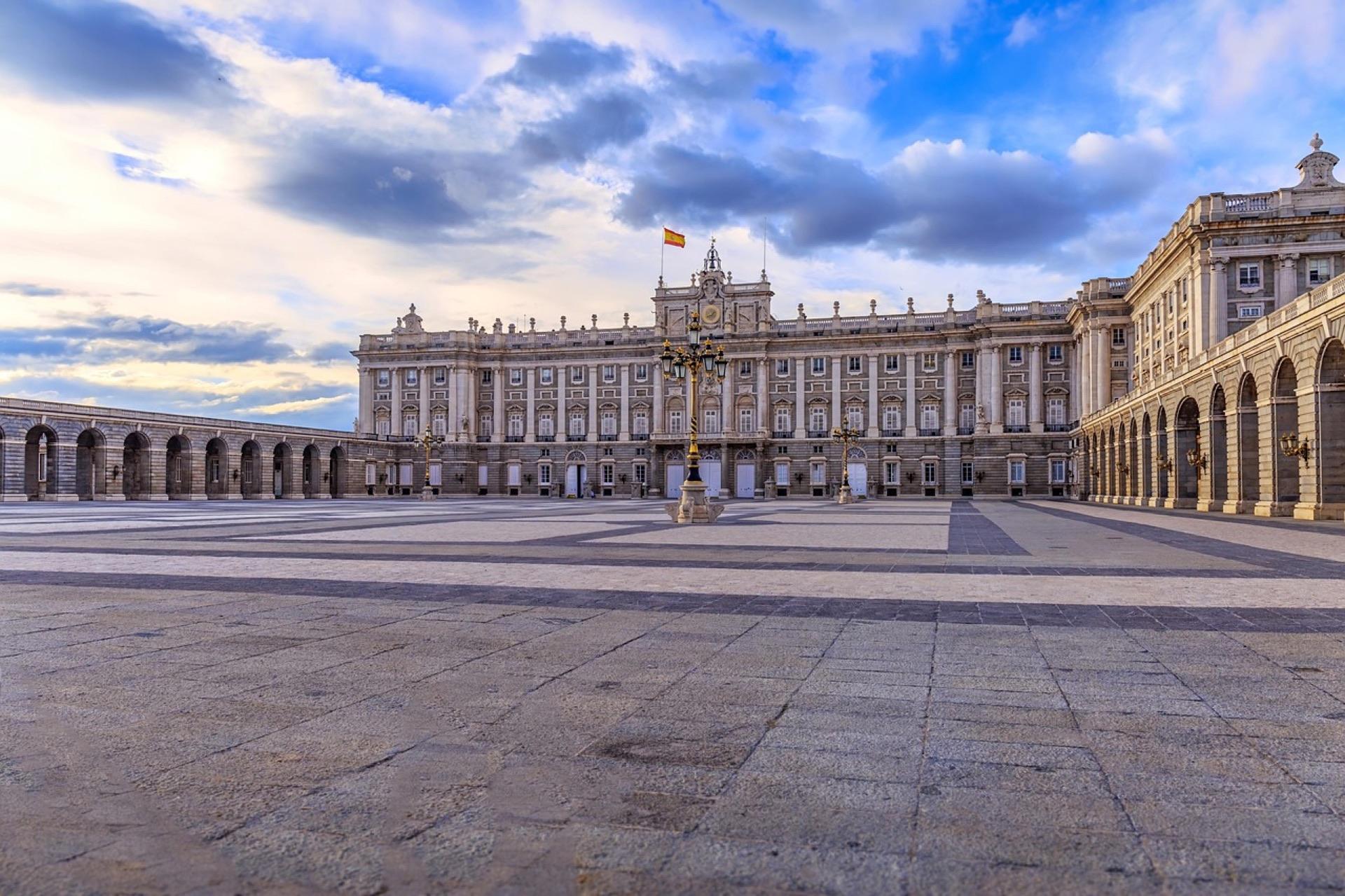
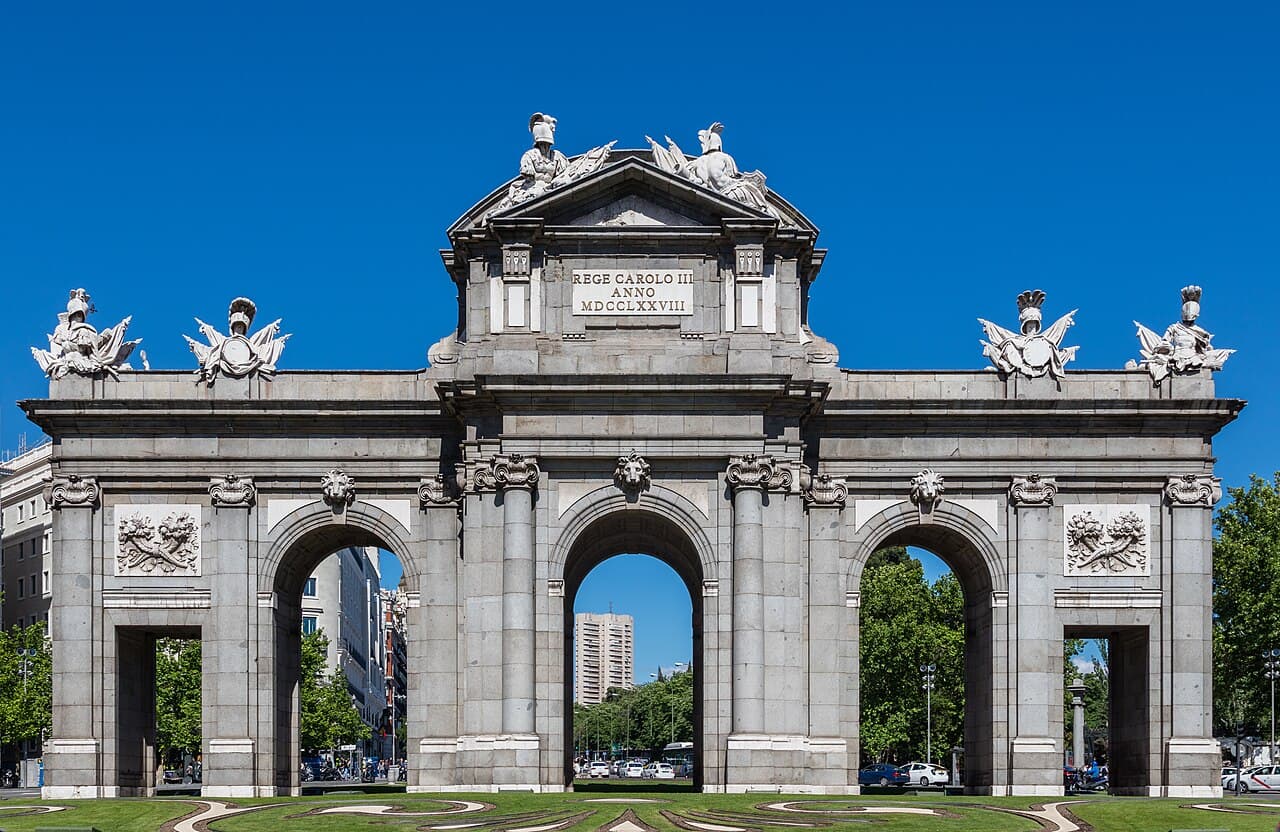
Madrid occupies the geographical centre of the Iberian Peninsula; it is the European capital furthest from the sea, and this continental position has shaped an identity turned inland rather than toward the coast. The Paseo del Arte lines up, within a single kilometre, the Prado, the Reina Sofía and the Thyssen-Bornemisza. The Prado, built from five centuries of collecting by the Habsburgs and later the Bourbons, holds Velázquez's Las Meninas and Goya's series of Black Paintings; the Reina Sofía keeps Picasso's Guernica. The Plaza Mayor, laid out under Philip III in the early 17th century, remains the social centre of old Madrid. El Retiro park, designed in the 1630s as a royal garden, was only opened to the public in 1868. Madrid social life happens at the table: Sunday vermouths in La Latina, the chain of tapas at the Mercado de San Miguel — a market installed in an iron hall since 1916 — dinners that rarely start before ten in the evening.

Museo del PradoRoyal PalaceRetiro ParkPlaza MayorReina Sofía
Andalusia

Andalusia

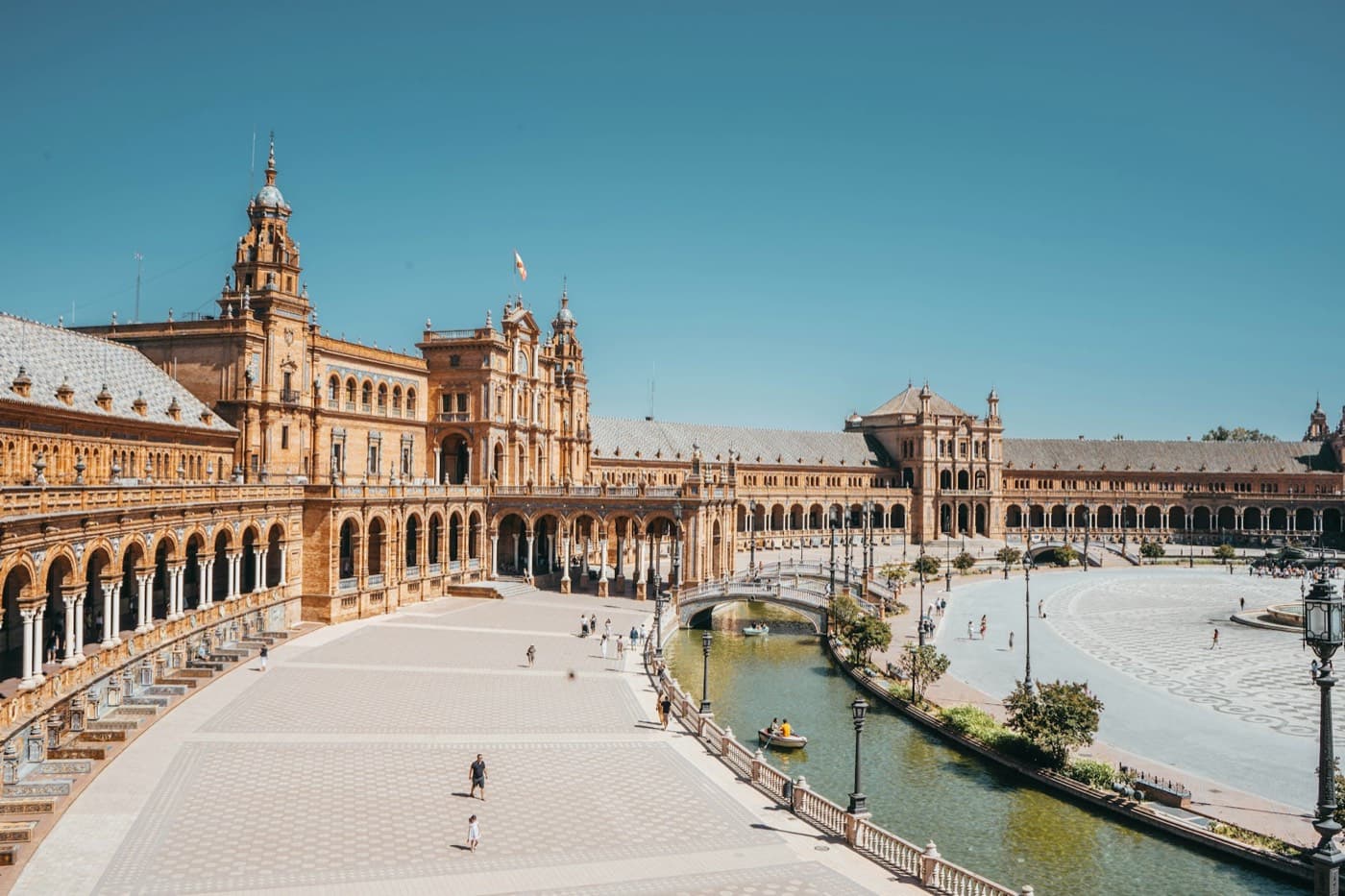
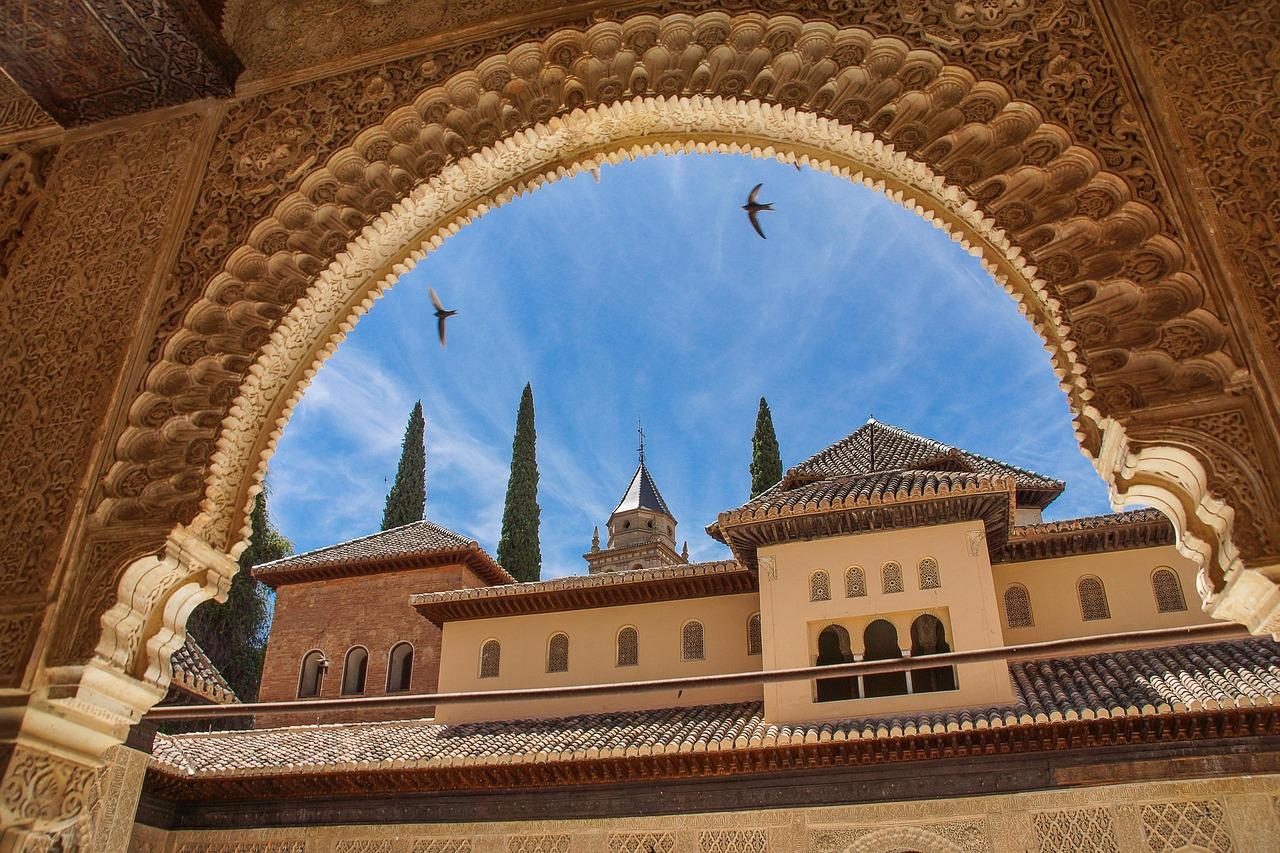
Andalusia is Spain's southernmost community; it remained under Muslim authority from 711 to 1492, and these eight centuries of Iberian dynasties have durably shaped regional culture. The Alhambra of Granada, the last masterpiece of the Nasrid dynasty, reaches with the Hall of the Abencerrajes and the Court of the Lions a geometrical peak of Islamic art. The Mezquita of Córdoba, conceived under Hisham II as a vast mosque with a thousand columns, was transformed after the Reconquest by the insertion of a Catholic cathedral into its very core: this overlay produced one of the most singular buildings in the Mediterranean. The Alcázar of Seville, rebuilt in the 14th century in Mudéjar style, is still the oldest royal residence in Europe in continuous use by the Spanish monarchy. The white villages (pueblos blancos) run from Ronda to Frigiliana; Jerez is at once the cradle of flamenco and of sherry production. The sea of olive trees that covers Jaén, Córdoba and Granada makes Spain the world's leading producer of olive oil, at roughly half the global volume.

AlhambraMezquita de CórdobaAlcázar de SevilleRondaMálaga
Valencia

Valencia

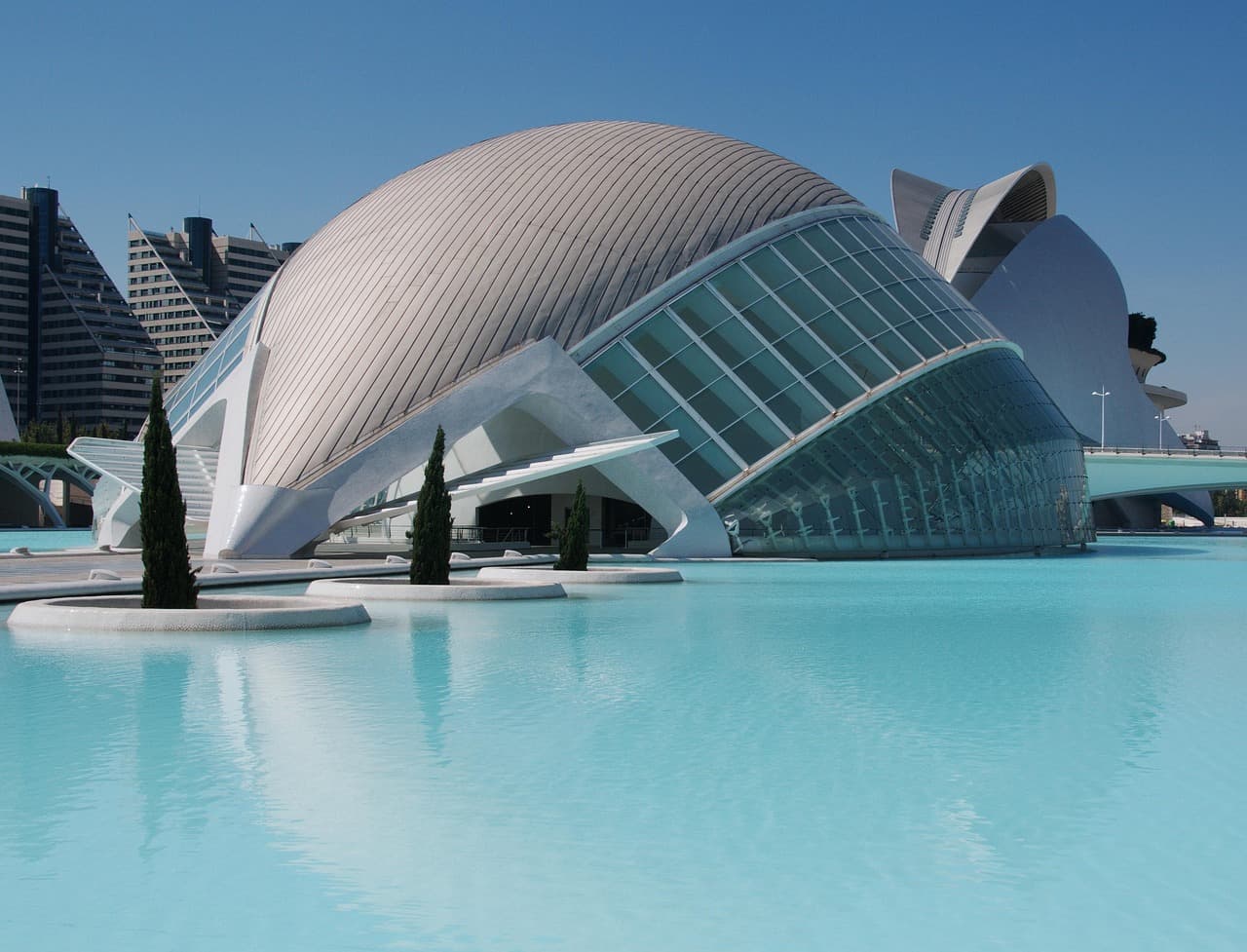
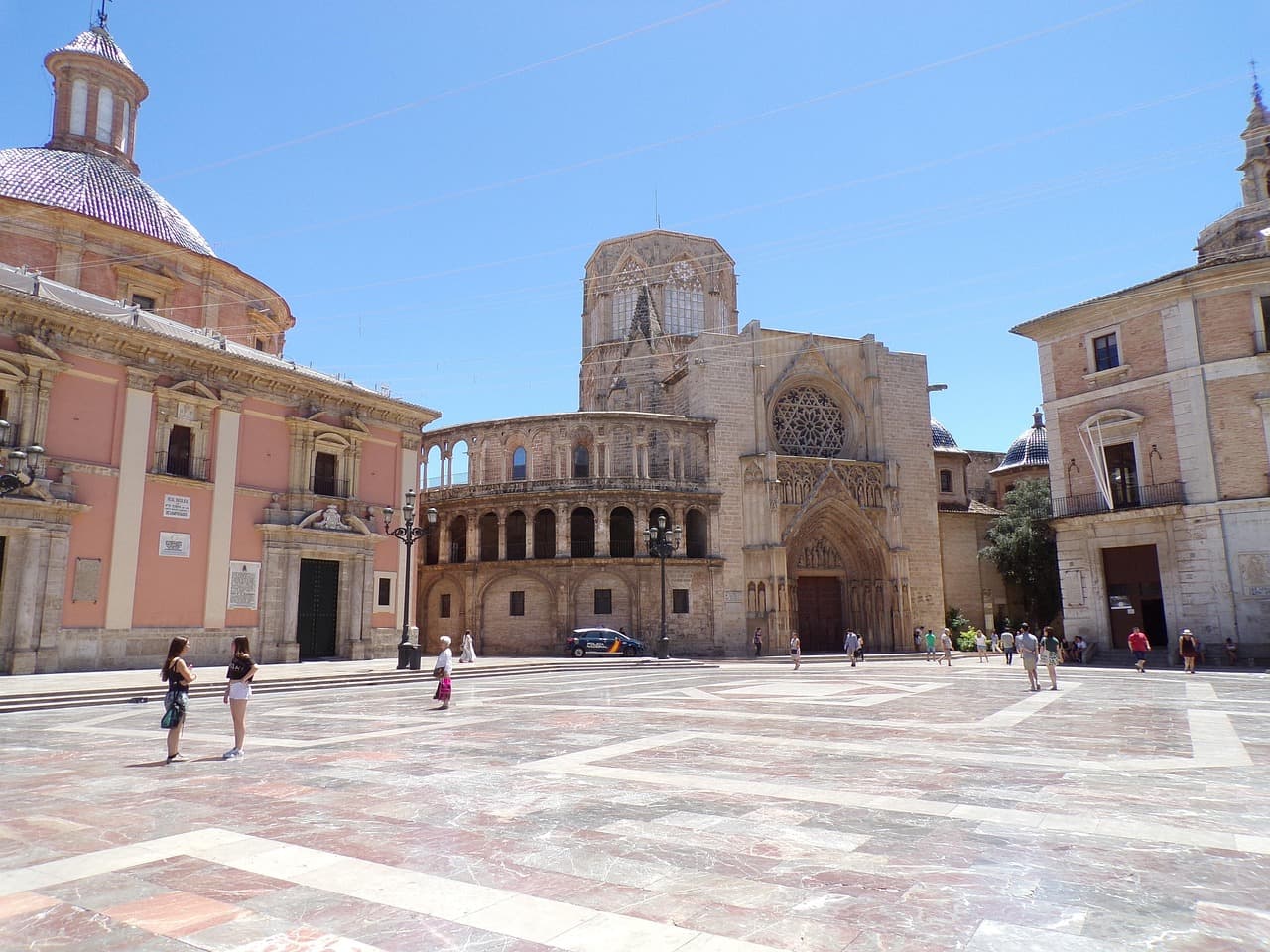
Valencia is Spain's third city, a former Mediterranean port whose recent urban history carries the mark of a precise event: the flooding of the Turia in 1957. In the 1970s, the bed of the river was diverted south of the city, and the former course was transformed into a nine-kilometre linear park that cuts through the city from east to west. The City of Arts and Sciences, designed by Santiago Calatrava from 1998 onwards, rises at the southern end of this axis and lines up a science museum, an opera house, an aquarium and a planetarium. The Mercado Central, opened in 1928, occupies an iron-and-stained-glass hall of 8,000 square metres; it is one of the largest food markets in Europe. The Gothic cathedral holds a chalice that tradition identifies as the Holy Grail. Paella valenciana was born on these lands; the original recipe — with chicken, rabbit and green beans — differs distinctly from the seafood versions served elsewhere, and Valencians take the preservation of it seriously.

City of Arts and SciencesCentral MarketTuria ParkLa Lonja de la Seda
Basque Country

Basque Country

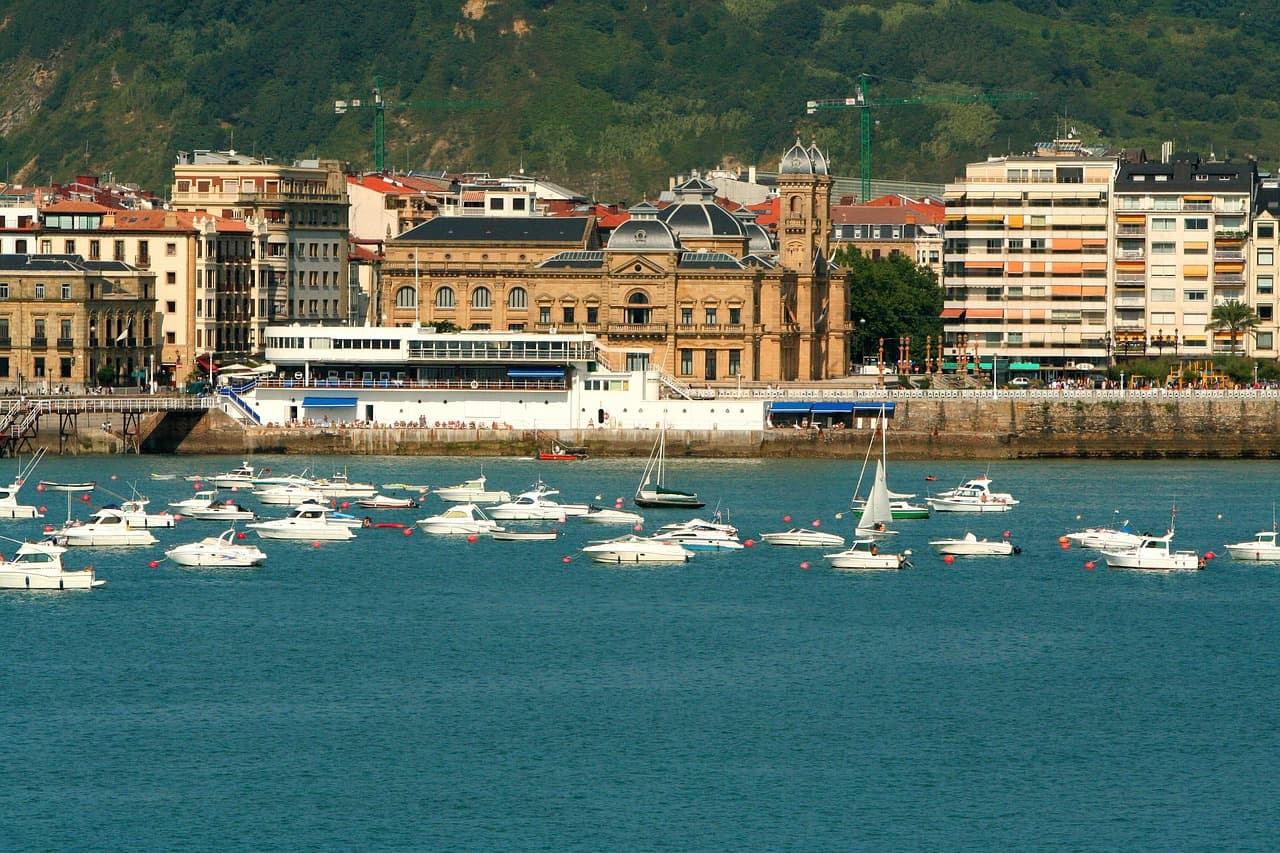
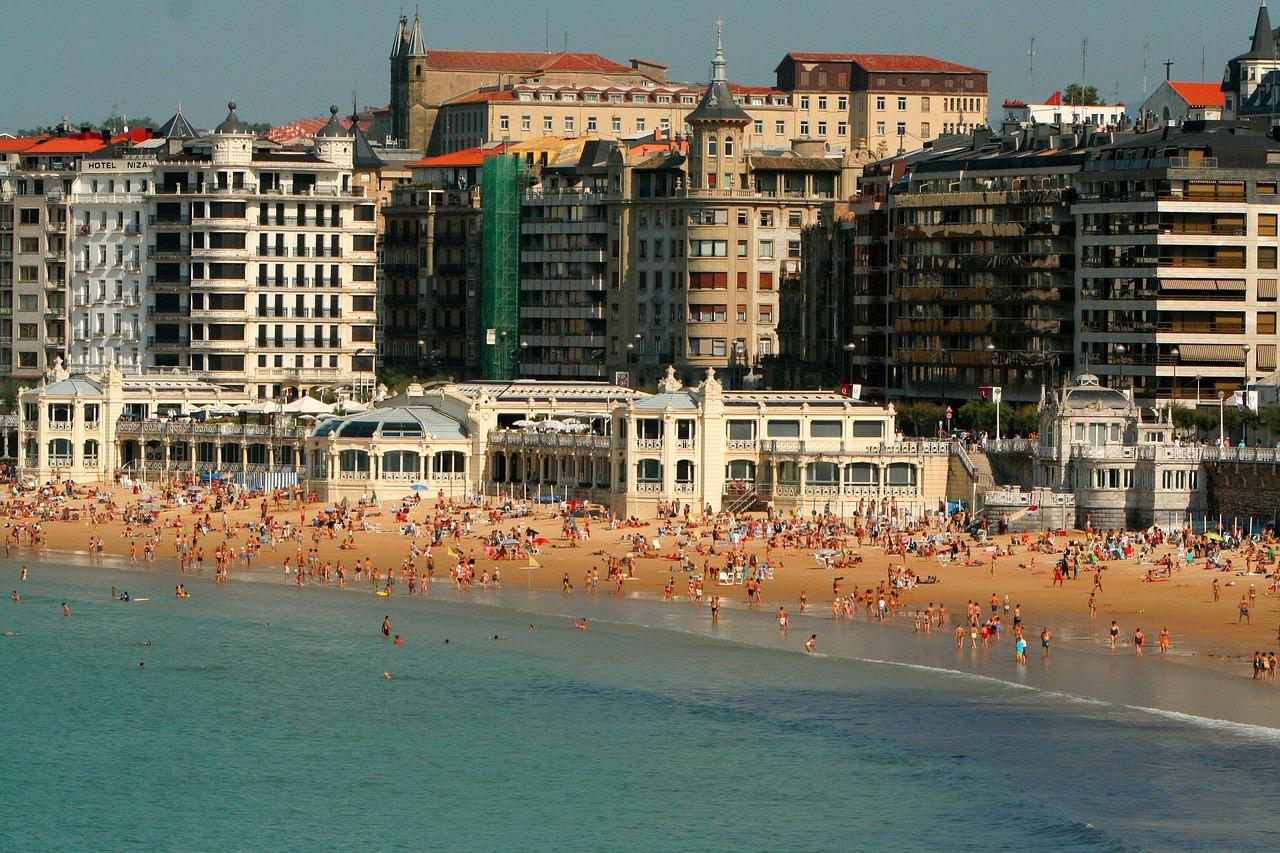
The Spanish Basque Country, on the northern coast of the peninsula, is home to one of Europe's oldest peoples; the Basque language, Euskara, is not attached to any known language family. After the collapse of its heavy industry at the end of the 20th century, Bilbao became in 1997, with Frank Gehry's Guggenheim, the international textbook case of urban regeneration; the titanium-clad building unfolds over the Nervión like the skeleton of a whale. San Sebastián (Donostia) owes its fame to the Concha bay, a perfect crescent bordered by an urban beach, and to its 19th-century Belle Époque centre; the city consistently tops global rankings for the density of Michelin stars per square kilometre. Pintxos here are not a regional variant of tapas but a culinary discipline of their own; moving from bar to bar, standing, in the old town, is part of everyday life. Vitoria-Gasteiz, the administrative capital of the autonomous community, was named European Green Capital.

Guggenheim BilbaoSan SebastiánLa ConchaPintxosVitoria-Gasteiz
Galicia

Galicia

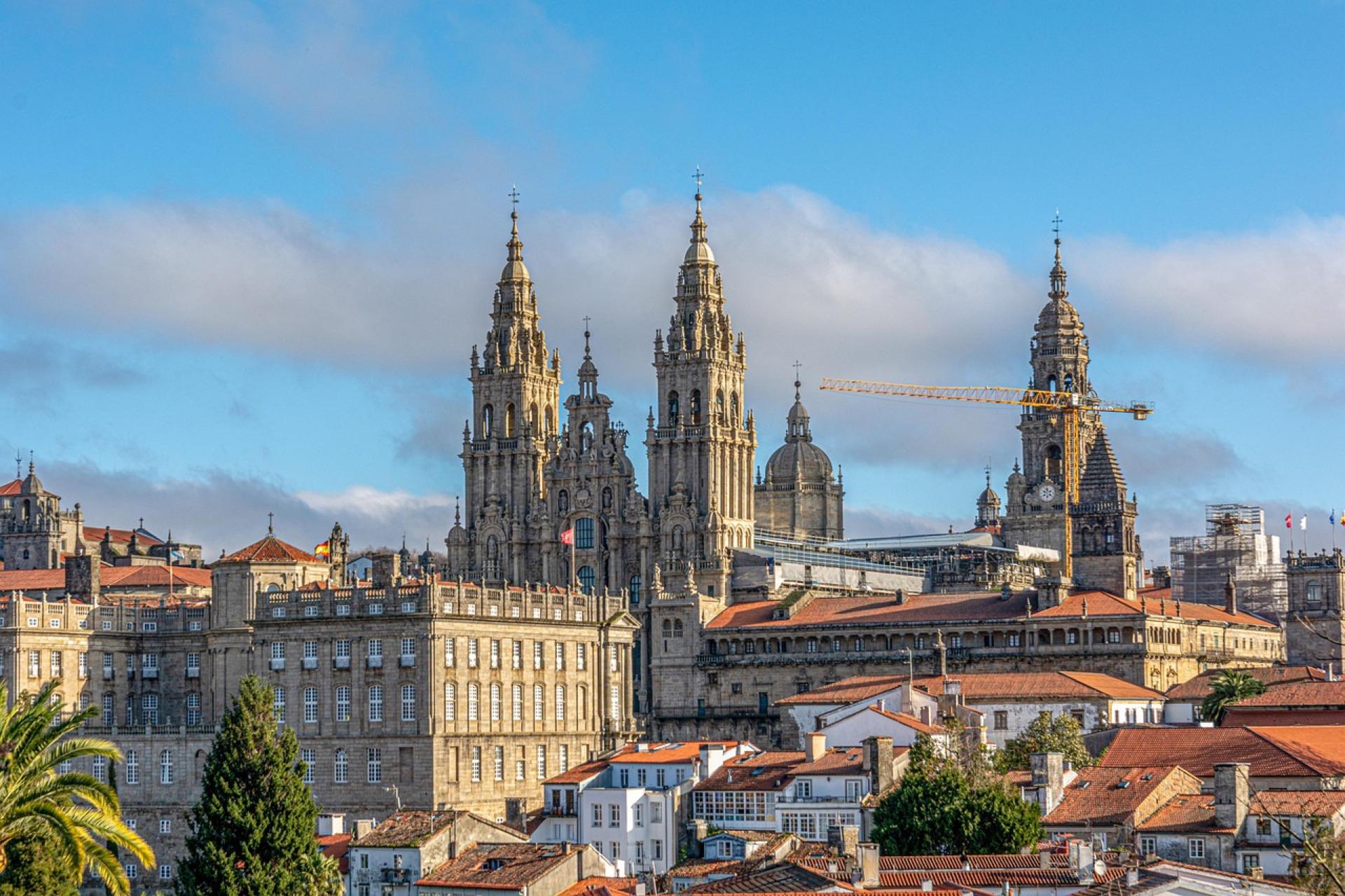
Galicia occupies the northwest corner of the Iberian Peninsula: its Atlantic estuaries (the rías), its 800 millimetres of annual rainfall, its Celtic-rooted music and its Galician language set it apart from the rest of Spain. Santiago de Compostela's cathedral, completed in 1211 in a Romanesque-Baroque marriage, has marked the end of the Camino since the apostle's tomb was discovered there in the 9th century; four hundred thousand pilgrims still cross its Portico of Glory each year. The Tower of Hercules in A Coruña, built by the Romans in the 2nd century, remains the world's oldest working lighthouse — UNESCO-listed. The Rías Baixas hold the world's largest Albariño vineyards and Spain's most productive seafood waters; Vigo bay alone produces 250 million mussels a year. The Costa da Morte keeps the memory of a maritime graveyard in its Atlantic cliffs. Pulpo a la gallega, empanadas, percebes, queimada — the cooking carries the region's Atlantic identity.

Santiago de CompostelaTower of HerculesRías BaixasCosta da MorteAlbariño
Submit a request